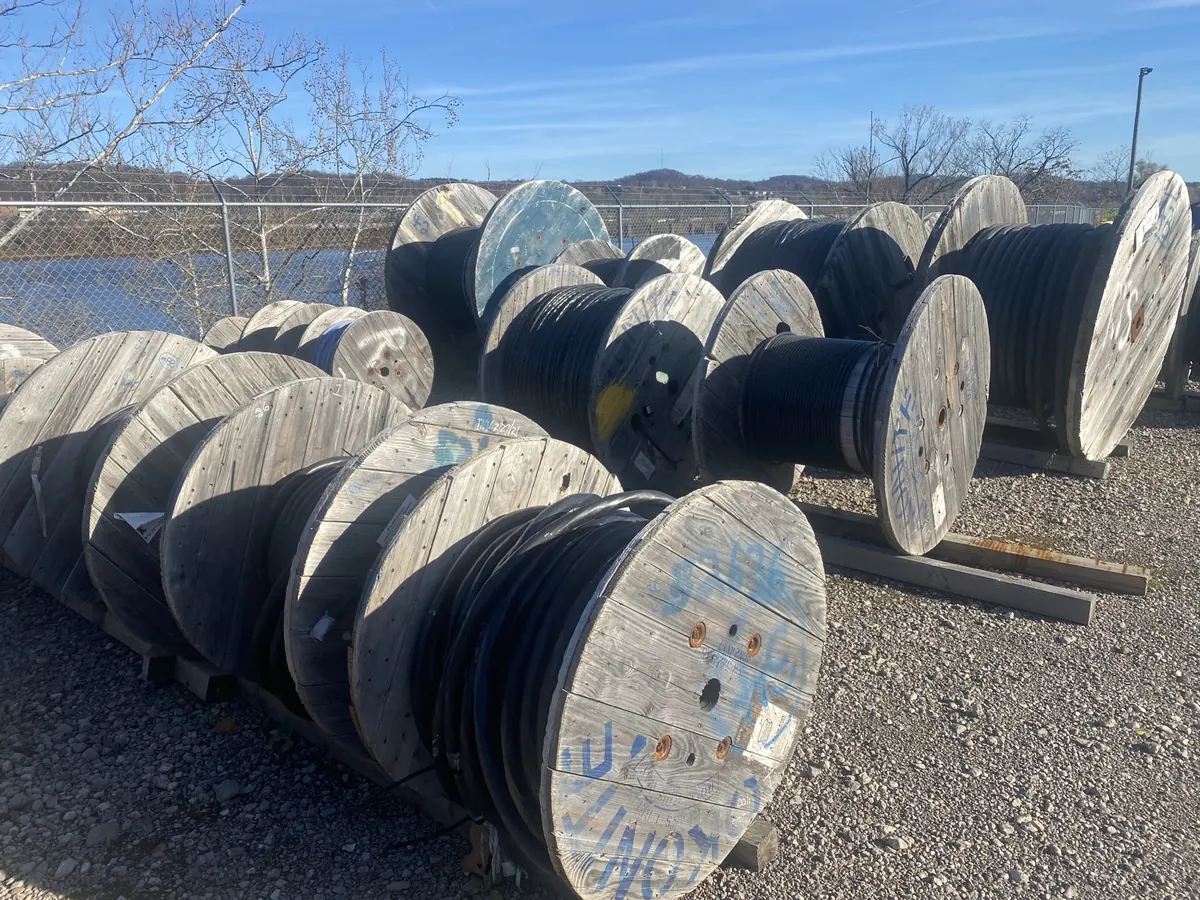
LOTSWhat we usually see
Overhead conductors are out of scope, but URD, MV primary (15 kV, 25 kV, 35 kV) and secondary cable leftovers from utility contractors and co-op projects are in scope.
Common wire and cable types
Where these sellers are concentrated
01A Utility Surplus Cable Buyer for Project Leftovers
Utility and co-op projects can leave cable behind when installed lengths differ from estimates, project scopes change or purchased material remains unused. Contractors may finish with partial reels of primary cable, unused secondary cable or cut lengths that no longer match the next job. Those leftovers deserve a reuse review before they become a scrap decision.
Houston Wire Buyers focuses on new, unused and reusable material. Full reels are welcome, but a lot does not need to consist entirely of unopened reels. Identify partial reels and cut lengths separately so we can review their footage, markings and condition without treating everything as one undifferentiated pile.
For this seller category, underground cable is the focus; overhead conductors are out of scope. Keep questionable material separate from intact cable. Burned, heavily damaged or very short pieces may be better suited to scrap, and we will tell you what is reusable rather than assume every utility leftover has resale value.
02URD, Primary Cable and Related Wire We Review
The main materials for these sellers are URD cable, medium-voltage cable and secondary cable. We review surplus primary cable identified as 15 kV, 25 kV or 35 kV. Include clear reel-tag photos and readable jacket print so the review starts with the actual cable identification, not just a description such as “underground wire.”
Related lots may include bare copper wire, USE-2/RHW-2 wire, XHHW-2 and SER/SEU cable. Copper and aluminum are both within our buying scope. List each marked type separately; these names do not make the products interchangeable or establish suitability for a particular installation.
If you want to sell URD surplus, show the packaging and exposed cable condition as well as the label. If you want to sell primary cable, photograph its voltage designation and other available identification. Missing or unreadable information makes evaluation less certain. Installation and design decisions belong with a licensed electrician or engineer.
03Organizing Utility Lots Across Yards and Job Sites
Start with an inventory list that connects each reel or group of cable to its photos and location. Useful entries include cable type, conductor metal, size, available footage or weight, manufacturer, date code and packaging condition. Report what you know, and label estimates as estimates rather than presenting them as verified footage.
For material at multiple sites, separate the inventory by location within Greater Houston. Explain which cable is available for sale and which remains assigned to active work. Include site-access constraints and the operational schedule that pickup needs to work around. These details help us review pickup logistics before scheduling a visit.
The sequence stays straightforward: we review the information, issue a written offer, schedule pickup or drop-off, and verify the material on site. Payment follows the written offer. Keep available tags and documentation with the corresponding material so the cable presented at verification can be matched to the inventory submitted for review.
04Recover Value Before Storage Reduces Reusability
Surplus cable takes up yard and warehouse space while tying up inventory that may not fit upcoming work. Keeping usable leftovers indefinitely also creates exposure to handling damage and weather-related deterioration of packaging. Reviewing excess material while its identification and condition are still clear can make the sale decision easier.
Reusable wire is usually worth more than its scrap, or melt, value. That does not mean every reel receives the same valuation. Our pricing considers the copper or aluminum market, cable type and current demand, size, footage, reel and packaging condition, manufacturer and date code, quantity, and pickup logistics.
Before requesting an offer, distinguish retained stock from genuine surplus. Then separate intact material from damaged cable and photograph both honestly. Do not remove useful identification simply to consolidate a lot. A readable tag and a clear account of remaining footage help explain what you have; neither guarantees a particular offer or makes damaged material reusable.
05Serving Utility Sellers Across Greater Houston
We serve utility, co-op and utility-contractor sellers in Cypress, TX, Conroe, TX, Texas City, TX and Katy, TX. Whether the surplus sits at a contractor’s yard or a project location, provide the actual material location when requesting review. A company mailing address alone does not establish where pickup would occur.
Our service area is Greater Houston only: Harris, Fort Bend, Montgomery, Brazoria, Galveston, Chambers and Waller counties. If an inventory spans several yards, identify the county and location for each lot so the review reflects the material inside our service area.
Scheduled pickup takes place at the seller’s site. Appointment-only drop-off is available at 6402 McGrew St, Houston, TX 77087, in southeast Houston’s Mayfair area near I-45 and I-610. Call first rather than dispatching a truck to the address without arranging the visit. Share access and scheduling constraints before transportation is planned.
06Start With Cable Photos and an Inventory
Call or text 951-403-5738, or email industrial832@gmail.com, to begin. Send photos of reel tags or jacket print, available footage or weight, and the location of the cable. Include an overall photo of each reel or grouped lot so the packaging and visible condition are part of the review.
For a mixed utility lot, organize the submission by cable type and site. Point out partial reels, cut lengths, damaged packaging and any missing identification. If footage is uncertain, say so. Clear information gives us a better basis for reviewing the material without asking you to treat an estimate as a confirmed quantity.
We review your submission and provide a written offer before scheduling pickup or appointment-only drop-off. On site, we verify the material; payment is per the written offer. Houston Wire Buyers is not affiliated with Houston Wire & Cable Company or any manufacturer. Contact us directly about the surplus you have available in Greater Houston.
FAQQuestions sellers ask
Can a co-op submit surplus cable that is still reserved for a project?
Identify reserved cable separately from material actually available for sale. A useful submission makes that distinction clear so the review does not include inventory your operations still need. If availability changes before scheduling, let us know which items remain in the lot so the written offer and material presented for verification stay aligned.
Should we send reel tags or jacket markings for primary cable?
Send both when available. A reel tag helps identify the packaged material, while readable jacket markings help show the cable itself. Include overall condition photos too. If a tag is detached or you are unsure whether it belongs to that reel, explain the uncertainty rather than using it as confirmed identification.
Can damaged reels still contain cable worth reviewing?
Reel or packaging damage does not by itself establish whether the cable is reusable. Show the damaged area and the visible cable condition, and describe anything you know about handling or exposure. We consider packaging condition in the review and will distinguish reusable material from cable better suited to scrap.
Do you need exact footage before we contact you?
Send available footage or weight with your photos and location. If your records provide only an estimate, clearly label it that way. You can begin the review with the information you have, but do not assume nominal reel footage equals the remaining quantity on a partial reel. Material is verified on site.
Does an offer confirm that surplus cable suits another installation?
No. A buying review evaluates material for a surplus transaction; it is not an engineering approval or an installation recommendation. Cable markings and condition matter, but application requirements must be evaluated separately. Consult a licensed electrician or engineer for design, code compliance and suitability questions.