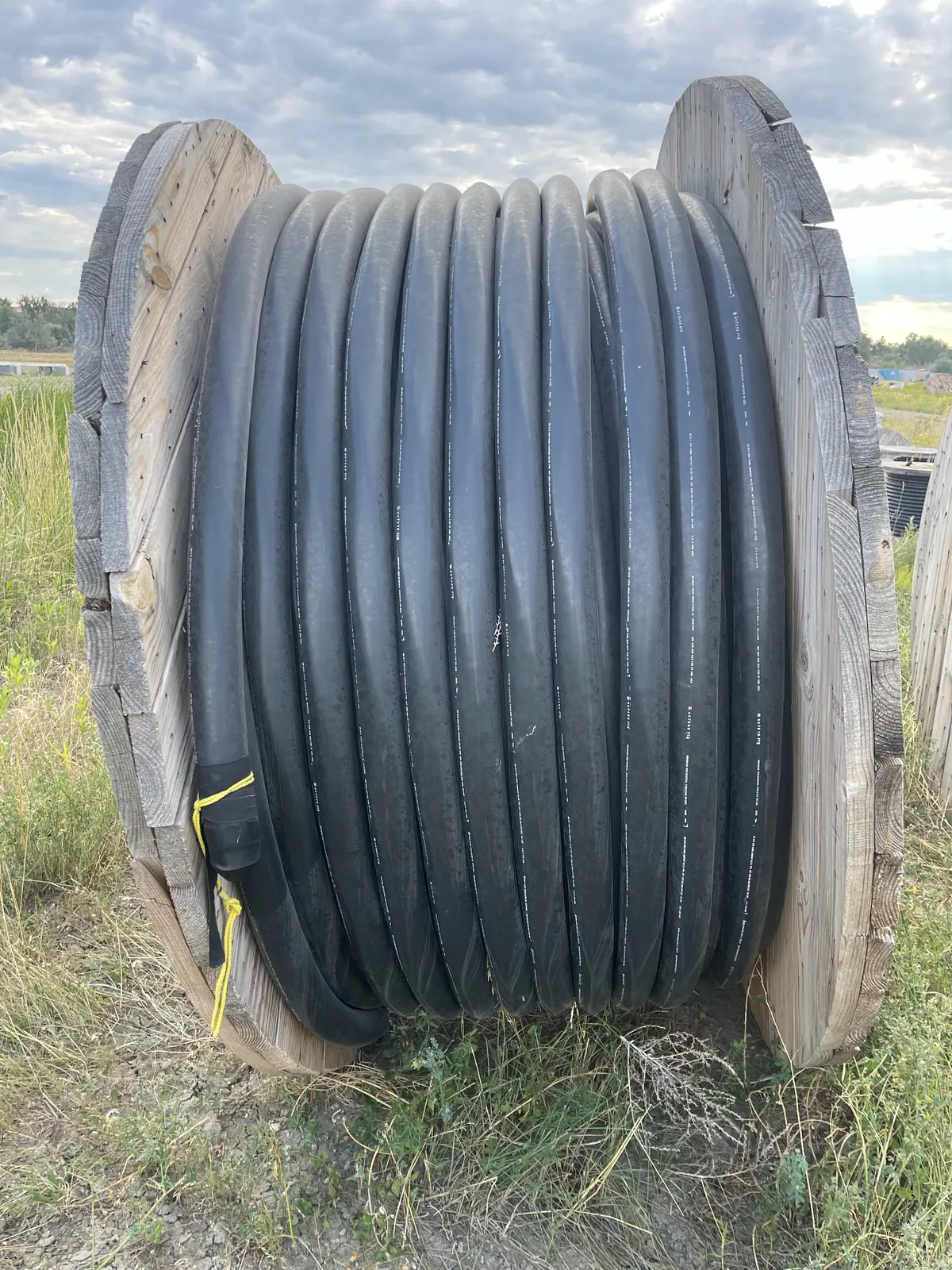
ALLEvery size, 18 AWG to 1000 kcmil
| Size | Area (kcmil) | Area (mm²) | Solid dia. (in) | Strands / dia. (in) | THHN OD (in) |
|---|---|---|---|---|---|
| 18 AWG | 1.62 | 0.823 | 0.04 | 7 / 0.046 | 0.084 |
| 16 AWG | 2.58 | 1.31 | 0.051 | 7 / 0.058 | 0.096 |
| 14 AWG | 4.11 | 2.08 | 0.064 | 7 / 0.073 | 0.111 |
| 12 AWG | 6.53 | 3.31 | 0.081 | 7 / 0.092 | 0.13 |
| 10 AWG | 10.38 | 5.26 | 0.102 | 7 / 0.116 | 0.164 |
| 8 AWG | 16.51 | 8.37 | 0.128 | 7 / 0.146 | 0.216 |
| 6 AWG | 26.24 | 13.3 | 0.162 | 7 / 0.184 | 0.254 |
| 4 AWG | 41.74 | 21.2 | 0.204 | 7 / 0.232 | 0.324 |
| 3 AWG | 52.62 | 26.7 | 0.229 | 7 / 0.26 | 0.352 |
| 2 AWG | 66.36 | 33.6 | 0.258 | 7 / 0.292 | 0.384 |
| 1 AWG | 83.69 | 42.4 | 0.289 | 19 / 0.332 | 0.446 |
| 1/0 AWG | 105.6 | 53.5 | 0.325 | 19 / 0.372 | 0.486 |
| 2/0 AWG | 133.1 | 67.4 | 0.365 | 19 / 0.418 | 0.532 |
| 3/0 AWG | 167.8 | 85 | 0.41 | 19 / 0.47 | 0.584 |
| 4/0 AWG | 211.6 | 107 | 0.46 | 19 / 0.528 | 0.642 |
| 250 kcmil | 250 | 127 | — | 37 / 0.575 | 0.711 |
| 300 kcmil | 300 | 152 | — | 37 / 0.63 | 0.766 |
| 350 kcmil | 350 | 177 | — | 37 / 0.681 | 0.817 |
| 400 kcmil | 400 | 203 | — | 37 / 0.728 | 0.864 |
| 500 kcmil | 500 | 253 | — | 37 / 0.813 | 0.949 |
| 600 kcmil | 600 | 304 | — | 61 / 0.893 | 1.051 |
| 750 kcmil | 750 | 380 | — | 61 / 0.998 | 1.14 |
| 1000 kcmil | 1000 | 507 | — | 61 / 1.152 | 1.311 |
Values from NEC Chapter 9 Tables 5 and 8; THHN diameters are approximate.
01Wire Sizes We Buy, From 18 AWG to 1000 kcmil
Our size range covers building wire, cable assemblies, industrial cable, utility and medium-voltage cable, flexible cable, bare copper and specialty cable. The gauge is a starting point for review, not a complete description of the material. Two reels with the same conductor size can have different constructions, intended applications and resale demand.
We focus on material that can be reused. New surplus and unused job leftovers are worth reviewing, whether they remain on a full reel or have been divided into partial reels, coils or cut lengths. Reusable material does not have to be in its original packaging, but clear identification helps us evaluate it.
Tell us whether the conductor is copper or aluminum and whether the inventory contains individual conductors or cable assemblies. If you have mixed sizes, separate them in your photos and inventory notes. That gives us a clearer basis for reviewing each item rather than treating the whole lot as unidentified wire.
02Identify Conductor Size From Jacket Print and Reel Tags
Look for the size marking along the insulation or outer jacket, then compare it with the reel tag. AWG identifies conductor size using the American Wire Gauge system; within that system, smaller gauge numbers indicate larger conductors. The designation kcmil expresses conductor cross-sectional area in thousands of circular mils. Neither designation describes the outside diameter of the insulated wire.
Photograph a readable stretch of jacket print and the complete reel tag. Include the wire type, conductor metal, manufacturer, date code and footage wherever those details appear. For a cable assembly, capture the conductor count and size markings rather than assuming the cable’s outside thickness identifies its conductors.
Do not estimate gauge from appearance alone. Insulation thickness and cable construction can make similar-looking material substantially different. If markings are missing or conflicting, say so when you submit the photos. For conductor sizing, ampacity or installation suitability, consult a licensed electrician or engineer rather than relying on a resale review.
03How Wire Size Affects Surplus Value
Conductor size affects the amount of copper or aluminum in a given length, but larger wire does not automatically produce a better surplus offer. We also consider wire type and current demand, available footage, reel and packaging condition, manufacturer, date code, total quantity and pickup logistics. The conductor metal market is another part of that review.
A clearly identified, usable length may have more resale potential than a larger conductor with uncertain markings or heavy damage. Keeping reel tags, preserving packaging and separating different materials helps us understand what you have. Report footage or weight as accurately as you can, and distinguish labeled quantities from estimates.
Reusable wire is usually worth more than scrap melt value. However, short pieces, burned wire and heavily damaged material may be better suited to scrap. Cut lengths need individual review because usable length and condition matter. As AWG and kcmil wire buyers, we evaluate reuse potential alongside metal content and tell you what is reusable.
04Browse the Wire Gauge and kcmil Size Groups
These groups organize the sizes covered by this hub. They help you sort inventory for review; they are not recommendations for electrical design or installation. Match each item to its printed designation, and keep different wire types separate even when the gauge is the same.
- Smaller AWG sizes: 18 AWG wire, 16 AWG and 14 AWG. Include construction details because size alone does not establish the cable’s use.
- Additional building and industrial inventory: 12 AWG wire, 10 AWG and 8 AWG. Report footage separately for each size and type.
- Larger numbered gauges: 6 AWG wire, 4 AWG, 3 AWG, 2 AWG and 1 AWG. Identify copper or aluminum.
- Aught sizes: 1/0 AWG wire, 2/0 AWG, 3/0 AWG and 4/0 AWG. Preserve the full size designation in your notes.
- kcmil sizes: 250 kcmil wire, 300 kcmil, 350 kcmil, 400 kcmil, 500 kcmil, 600 kcmil, 750 kcmil and 1000 kcmil wire. Photograph the tag and jacket markings together.
05Pickup and Appointment Drop-Off in Greater Houston
Houston Wire Buyers serves Greater Houston only: Harris, Fort Bend, Montgomery, Brazoria, Galveston, Chambers and Waller counties. We schedule pickup at the seller’s site after reviewing the material and providing a written offer. Include the location with your inventory so pickup logistics can be considered from the start.
For reels and mixed lots, describe how the material is stored and any access restrictions at the site. Photos showing the inventory as a whole help us understand the packaging and arrangement. Keep individual size markings readable in separate close-up photos rather than relying only on a wide shot.
Drop-off at 6402 McGrew St, Houston, TX 77087 is by appointment only; call first. The address is in southeast Houston’s Mayfair area, near I-45 and I-610. Review our Houston wire pickup information before planning a move. Do not bring material to McGrew St without arranging the appointment, even if you already have an inventory ready.
06Send Your Wire Inventory for a Written Offer
Text photos to 951-403-5738 or email industrial832@gmail.com. Include readable reel tags or jacket print, footage or weight, and the material’s location. For a mixed inventory, list each gauge with its conductor metal, wire type and available quantity. Note missing labels, damaged packaging or uncertain footage instead of leaving those details out.
We review the information and provide a written offer before scheduling pickup or appointment drop-off. At the scheduled handoff, we verify the material on site, with payment per the written offer. This sequence keeps the offer tied to the actual inventory rather than a gauge description alone.
Use the offer request page to begin with the details you have. You do not need to decide whether every item has resale potential before contacting us; show the condition clearly so we can assess reuse. Houston Wire Buyers is not affiliated with Houston Wire & Cable Company or any manufacturer.
FAQQuestions sellers ask
Can I submit several wire gauges in one inventory?
Yes. A mixed inventory can include different gauges, copper and aluminum, and different packaging formats. Give each item its own description and photo reference so the size, type and quantity stay connected. Avoid reporting only a combined weight when you also have individual reel labels or footage information available.
Is 1 AWG the same size as 1/0 AWG?
No. They are distinct conductor sizes, and 1/0 AWG is larger than 1 AWG. Preserve the slash and zero when copying an aught designation from a tag or jacket. A clear close-up photo helps prevent a transcription error from turning one inventory item into a different size.
Should I strip the insulation before asking for an offer?
Keep potentially reusable insulated wire intact for the initial review. Removing insulation changes the material and removes jacket markings that may identify its construction. Send photos of its current condition first. We also buy bare copper, but bare conductor and stripped insulated wire are not interchangeable descriptions of the original product.
Does a gauge marking prove that wire is suitable for a project?
No. Gauge identifies conductor size, not complete installation suitability. Wire type, conductor material, insulation, application and installation conditions also matter. Our review concerns buying surplus material. Have a licensed electrician or engineer determine whether a particular conductor or cable meets the requirements of a proposed installation.
Can you review wire when the remaining footage is uncertain?
Send the information you have and clearly label the footage as uncertain. Include any reel tag, available weight and photos of the remaining material. Do not present an original reel quantity as the current balance if wire has been removed. We review those details and verify the material at the scheduled handoff.