SPEC1 AWG at a glance
| Also called | 1 gauge |
|---|---|
| Conductor area | 83.69 kcmil · 42.4 mm² |
| Solid diameter | 0.289 in |
| Stranded (Class B) | 19 strands · 0.332 in |
| THHN outside diameter | ≈ 0.446 in |
| Finished copper wire weight | ≈ 302 lb / 1,000 ft |
| Bare copper weight | ≈ 259 lb / 1,000 ft |
| Common put-ups | 500 ft reels · 1,000 ft reels |
| Conductor | 60 °C | 75 °C | 90 °C |
|---|---|---|---|
| Copper | 110 A | 130 A | 145 A |
| Aluminum | 85 A | 100 A | 115 A |
Dimensions from NEC Chapter 9 Tables 5 and 8. Weights are approximate and vary by manufacturer and insulation. For design, follow the NEC and a licensed electrician.
Wire types we buy in 1 AWG
01Identify 1 AWG Wire Before Requesting an Offer
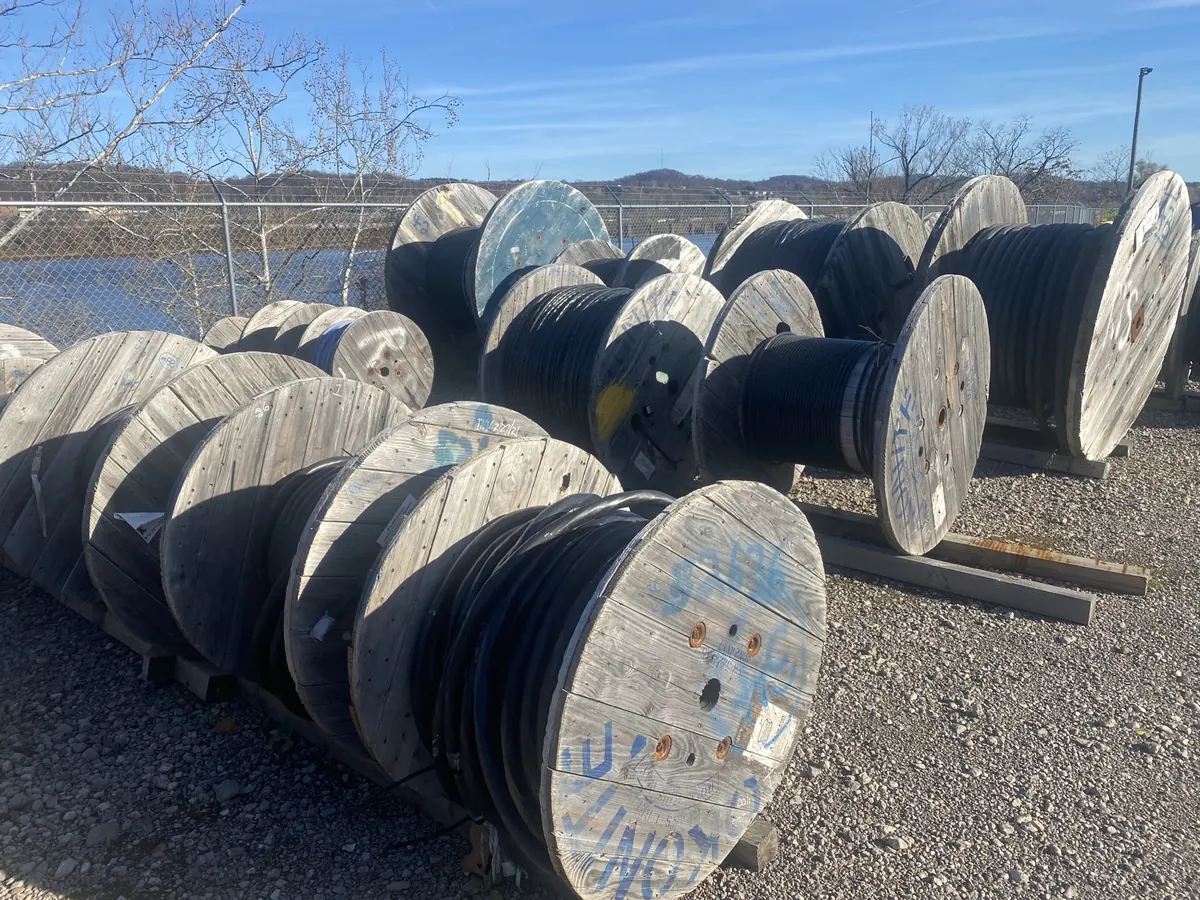
Start with the jacket print and reel tag. Photograph the size designation, conductor metal, insulation type, manufacturer and date code wherever they appear. Include an overall photo so we can see whether the material is on a reel, coiled or stored as cut lengths. Clear markings help us distinguish reusable inventory from material that needs closer inspection.
The designation 1 AWG means 1 gauge. It does not mean 1/0 AWG, which is called one-aught and is a different size. MCM and kcmil are equivalent area designations, not alternative names for 1 gauge; the conductor area here is 83.69 kcmil.
Diameter can support identification, but it should not replace readable markings. A solid 1 AWG conductor measures 0.289 inch, while Class B stranded construction has 19 strands and a conductor diameter of 0.332 inch. Approximate THHN outside diameter is 0.446 inch. That last measurement includes insulation, so do not compare it directly with bare conductor diameter.
02What the 1 AWG Specifications Mean
The specification chart separates conductor area, construction, finished dimensions, weight and ampacity. The 42.4 mm² area describes the conductor cross-section. Finished cable diameter and weight also depend on insulation and construction, so a THHN reference does not describe every welding lead or medium-voltage cable carrying the same gauge designation.
Under NEC 310.16 at 30°C ambient, before adjustments, 1 AWG copper ampacities are 110 amps in the 60°C column, 130 amps in the 75°C column and 145 amps in the 90°C column. Aluminum values are 85, 100 and 115 amps in those respective columns. Our wire ampacity chart provides context for reading those ratings.
These are reference values, not automatic circuit approvals. Insulation markings alone do not determine the usable ampacity; termination ratings, installation conditions and applicable adjustments matter. Medium-voltage and flexible cable applications also need their own evaluation. Have a licensed electrician or engineer confirm suitability before selecting or reinstalling surplus wire.
03Where 1 AWG Cable Appears in Houston Projects
In Houston construction, 1 AWG material can remain after feeder installations, service work or changes to an electrical package. Plant projects can leave spare industrial cable after equipment work or revised cable schedules. Those leftovers may still have resale value when the type, length and condition fit another application.
Typical application descriptions include copper feeders in the 130–150 amp range and some 150-amp service applications. Those descriptions are not blanket ampacity approvals. In particular, the NEC 310.16 reference values above do not establish a general 150-amp feeder rating for 1 AWG copper. A licensed electrician or engineer must evaluate the actual circuit and any applicable service-conductor provisions.
This size also appears in smaller medium-voltage cable constructions and welding leads. We review the complete cable identification rather than treating every 1 AWG conductor alike. When sending surplus from a Houston jobsite or plant, separate material by type and provide the original tags if available. That makes the inventory easier to evaluate.
04Types of Surplus 1 AWG Cable We Buy
We buy surplus 1 AWG cable in copper and aluminum when it is new, unused or reusable. The gauge alone is not enough to identify its market: insulation system, cable construction and condition all affect the review. Send jacket photos even if the reel label already lists the size.
The types we review include:
- THHN/THWN-2 building wire for clearly identified surplus stock.
- XHHW-2 wire, with conductor metal and footage documented.
- USE-2/RHW-2 wire, including readable rating markings.
- MC cable, identified by its complete cable construction.
- Medium-voltage cable, with voltage-class and construction markings visible.
- Welding cable, with usable length and jacket condition shown.
For multiconductor cable, identify the full assembly rather than only the size of one conductor. Keep unlike types separate when practical. We will tell you what appears reusable; burned, heavily damaged or excessively short material may be better suited to scrap than resale.
05How Footage, Weight and Packaging Affect Wire Value
The 1 AWG copper wire value depends on more than copper content. We consider conductor metal markets, cable type and demand, size, footage, manufacturer, date code, quantity, reel or packaging condition, and pickup logistics. Reusable wire is usually worth more than its scrap or melt value, but condition and identification must support that reuse.
Weight can help estimate footage when the construction is known. Finished copper THHN/THWN-2 weighs approximately 302 pounds per 1,000 feet. If the wire itself weighs approximately 302 pounds after subtracting the reel and packaging, the estimated footage is approximately 1,000 feet. Divide net wire weight by 302, then multiply by 1,000 for this specific construction.
Do not apply that conversion to every cable. Bare stranded copper is about 259 pounds per 1,000 feet; bare aluminum is about 79 pounds per 1,000 feet. Common 500-foot and 1,000-foot reels help organize inventory, but a reel's original label does not prove how much remains. Report remaining footage separately from the original put-up.
06Selling 1 Gauge Wire in Greater Houston
When you need 1 AWG wire buyers, start with photos of the reel tags or jacket print, footage or weight, and the material's location. We review those details and issue a written offer. After you accept, we schedule pickup or an appointment for drop-off, verify the material on site and arrange payment per the written offer.
We serve Greater Houston only: Harris, Fort Bend, Montgomery, Brazoria, Galveston, Chambers and Waller counties. Our address is 6402 McGrew St in southeast Houston's Mayfair area, near I-45 and I-610. Drop-off is by appointment only, so call before transporting wire.
For heavy reels, tell us about site access, storage conditions and any loading constraints before scheduling. Include photos that show the reels and their surroundings. Do not move or load heavy material without suitable equipment and safe handling arrangements. To sell 1 gauge wire, call or text 951-403-5738, or email industrial832@gmail.com with your inventory details.
FAQQuestions sellers ask
Should I remove the insulation before selling 1 AWG wire?
Leave identifiable, reusable wire intact for the initial review. Stripping insulation removes the jacket markings and changes the material from finished wire to bare conductor. Send photos first so we can evaluate it in its current form. We focus on reusable material and will tell you if its condition makes scrap a more appropriate option.
Can I submit a lot containing both copper and aluminum 1 AWG?
Yes. We buy both conductor metals, but identify and photograph them separately where possible. Do not assume the same gauge means the same weight, ampacity or value. If the metal is unclear, send readable tag and jacket photos rather than guessing, and note which reels or coils belong together.
What if my partial reel has no reliable footage count?
Tell us the footage is unknown rather than using the reel's original quantity as the remaining amount. Send photos, any available weight information and the cable identification. Explain whether the reported weight includes the reel. We can review the available information, with material verification occurring before payment per the written offer.
Is older 1 AWG wire automatically unsuitable for resale?
Age alone does not provide enough information to judge the material. Manufacturer and date code are pricing factors, and jacket condition, storage history and identification also matter to the review. Photograph readable markings and disclose known damage or exposure. Do not represent surplus wire as approved for a particular installation without professional evaluation.
Is Houston Wire Buyers affiliated with a wire manufacturer?
No. Houston Wire Buyers is not affiliated with Houston Wire & Cable Company or any manufacturer. We buy surplus wire from sellers in Greater Houston and evaluate the material offered. For your 1 AWG inventory, contact us directly with photos, quantity information and location to begin the written-offer process.