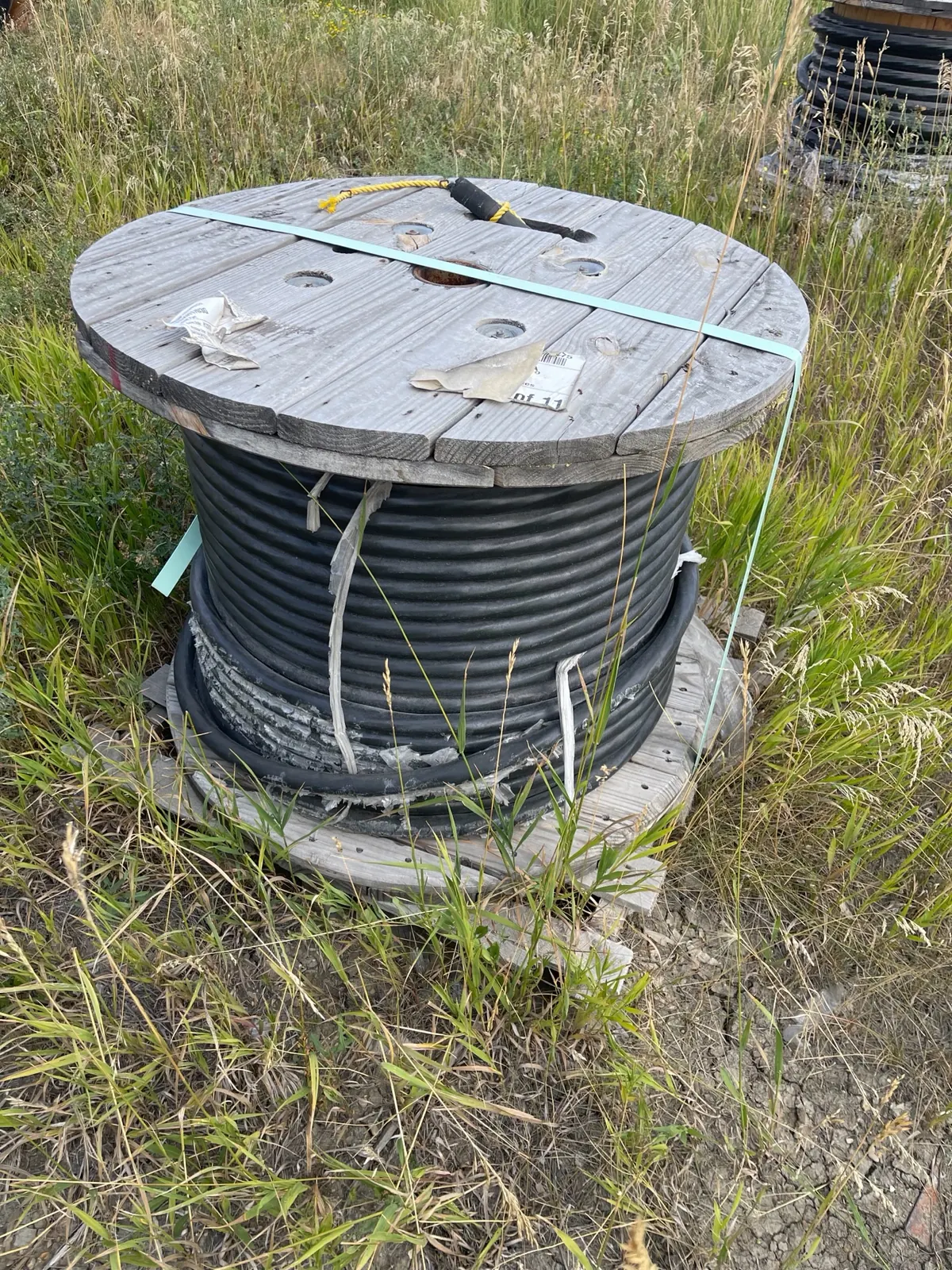
01Photos to Sell Wire: Start With the Reel Tag
Photograph the entire reel tag straight on, with enough light to read the printed information. Keep your phone steady and check the image before sending it. If glare washes out part of the label, change your angle or move the light rather than sending an unreadable shot.
Capture the manufacturer, product description, conductor size, footage and date code wherever those details appear. Tags vary, so include the whole label instead of cropping around one field. If a reel has multiple labels, show each one and explain which reel they belong to.
A tag describes labeled material, but it does not necessarily establish how much remains on a partial reel. Tell us whether the reel has been used and whether its original footage is still present. Our guide to reading a wire reel tag and jacket print explains how to interpret the identification before you submit it.
02Photograph a Readable Section of Jacket Print
Take a close-up of the lettering printed on the wire or cable itself. Show a readable stretch of the identification, not just the jacket color. Move along an accessible section until you find markings that are clear rather than rubbed off, hidden under dirt or facing the reel.
The print may identify the manufacturer, wire type, conductor size and other product markings. Photograph what is actually present; do not fill in missing specifications from memory. For cable with an outer jacket, show that jacket’s identification rather than relying only on the appearance of exposed conductors.
Keep the image associated with its reel tag. If the tag and jacket appear to disagree, send both and flag the difference so we can review it. Different wire types can look similar in a wide photo, which makes legible product identification more useful than color alone.
03Show an Existing Cut End Without Damaging the Wire
Photograph an existing, safely accessible cut end so we can see the conductor arrangement and visible condition. Position the camera to show the end face and some surrounding insulation or jacket. A sharp image is more helpful than a very close image that is out of focus.
Do not cut usable wire, strip insulation or remove protective end seals just to take a photograph. If the end is capped, sealed or inaccessible, say so and send the identification photos you can obtain safely. Never handle or photograph exposed ends on energized material.
An end photo helps show construction and obvious damage, but appearance alone does not establish the cable’s full specification or suitability for installation. Include the tag and jacket print with it. Mention visible corrosion, crushed insulation or other concerns rather than trying to hide them; we focus on reusable material and will tell you what appears reusable.
04Capture the Whole Reel and Its Flanges
Step back far enough to show the entire reel, including its flanges and the wire wound between them. Choose an angle that shows both the remaining material and the reel’s physical condition. If one side is hidden, add another view when you can do so safely.
Show broken flange edges, loose winding, damaged packaging or exposed wire. Do not rearrange the reel to conceal a problem. Reel and packaging condition affect evaluation because reusable material needs more than a readable label: its actual condition matters too.
A whole-reel photo provides context, but it is not a reliable footage measurement by itself. Report known footage and distinguish documented amounts from estimates. If the reel is partial and the quantity is uncertain, our guide to estimating footage left on a reel can help you organize the information available. Do not roll or lift a heavy reel just for a better picture.
05Give a Clear Overview of the Total Quantity
Take an overview showing all the material included in your proposed sale. For multiple reels, coils or boxes, use a clear arrangement or several overlapping views so we can understand the lot without counting the same item twice. Keep unrelated material out of the frame where practical.
Pair the overview with a short inventory. Identify each reel or group by an existing label or a simple reference name, then match its close-ups to that reference. List available footage or weight and mark anything that is estimated or unknown.
Separate different products in your description rather than presenting mixed wire as one uniform lot. For example, identify a full tagged reel separately from a partial reel with uncertain footage. This helps us connect the quantity to the correct specifications and condition. Include coils, boxed material and cut lengths in the overview, not just the largest reels.
06Document Storage Conditions and Visible Damage
Photograph the material where it is currently stored, including the floor or ground beneath it and any covering or packaging. Tell us whether it has been stored indoors, outdoors or moved between locations. A current photo is more useful than an older image that no longer reflects its condition.
Show visible water exposure, dirt, damaged wrapping, crushed sections or other concerns. If packaging blocks the view, explain what you can and cannot inspect. Do not open sealed packaging or dismantle a stack solely for photographs when that could damage the material or create a handling hazard.
Storage photos help us understand the lot; they do not prove electrical performance or installation suitability. Short, burned or heavily damaged wire may be better suited to scrap than reuse. Reusable wire is usually worth more than melt value, but we assess the actual material rather than assuming every surplus lot qualifies.
07Send Your Photo Set for a Houston Surplus Wire Offer
Text your photos to 951-403-5738 or email them to industrial832@gmail.com. Include available footage or weight, your Greater Houston location and any known identification or condition issues. If you are asking what photos wire buyers need, start with these six views and explain any photo you cannot safely obtain.
We review the information, provide a written offer, schedule pickup or drop-off, verify the material on site and arrange payment per the written offer. Photos support that review; they do not replace verification. You can request an offer once your details are organized.
Houston Wire Buyers serves Greater Houston only. Wire pickup in Houston is scheduled at your site; drop-off requires an appointment at 6402 McGrew St, Houston, TX 77087. Our southeast Houston location is in the Mayfair area near I-45 and I-610. Call first before bringing surplus wire to McGrew St.
FAQQuestions sellers ask
Can I send photos if the reel tag is missing?
Yes. Send readable jacket markings, an existing accessible end, the overall material and its condition. Explain that the tag is missing and include any documentation you have that belongs to that material. Missing identification can limit what we can confirm, so do not guess at the type or size.
Should I send original photos or screenshots?
Original photos are preferable when they preserve readable detail. Screenshots can make small lettering harder to examine, especially after cropping or resizing. Before sending, enlarge the image on your phone and check whether you can read the tag and jacket markings. Retake blurry pictures rather than sharpening them until the lettering looks different.
Can you value wire from a manufacturer’s catalog photo?
A catalog image does not show your material’s quantity, packaging or current condition. Send current photos of the actual wire you want to sell. Product documentation can provide supporting information when it matches the lot, but it cannot substitute for pictures showing what is available at your location.
Do photos establish whether surplus cable is safe to install?
No. Photographs can help identify material and reveal visible concerns, but they cannot establish electrical performance or suitability for a particular installation. Our offer review concerns buying surplus material. For design, testing or installation questions, consult a licensed electrician or engineer who can evaluate the cable and its intended use.
Will a complete photo set guarantee a faster offer or a fixed value?
No. Clear photos reduce missing information, but they do not guarantee a response time or value. Pricing depends on conductor metal, type, demand, size, footage, condition, manufacturer, date code, quantity and pickup logistics. We aim to respond quickly, and payment follows the written offer after on-site material verification.