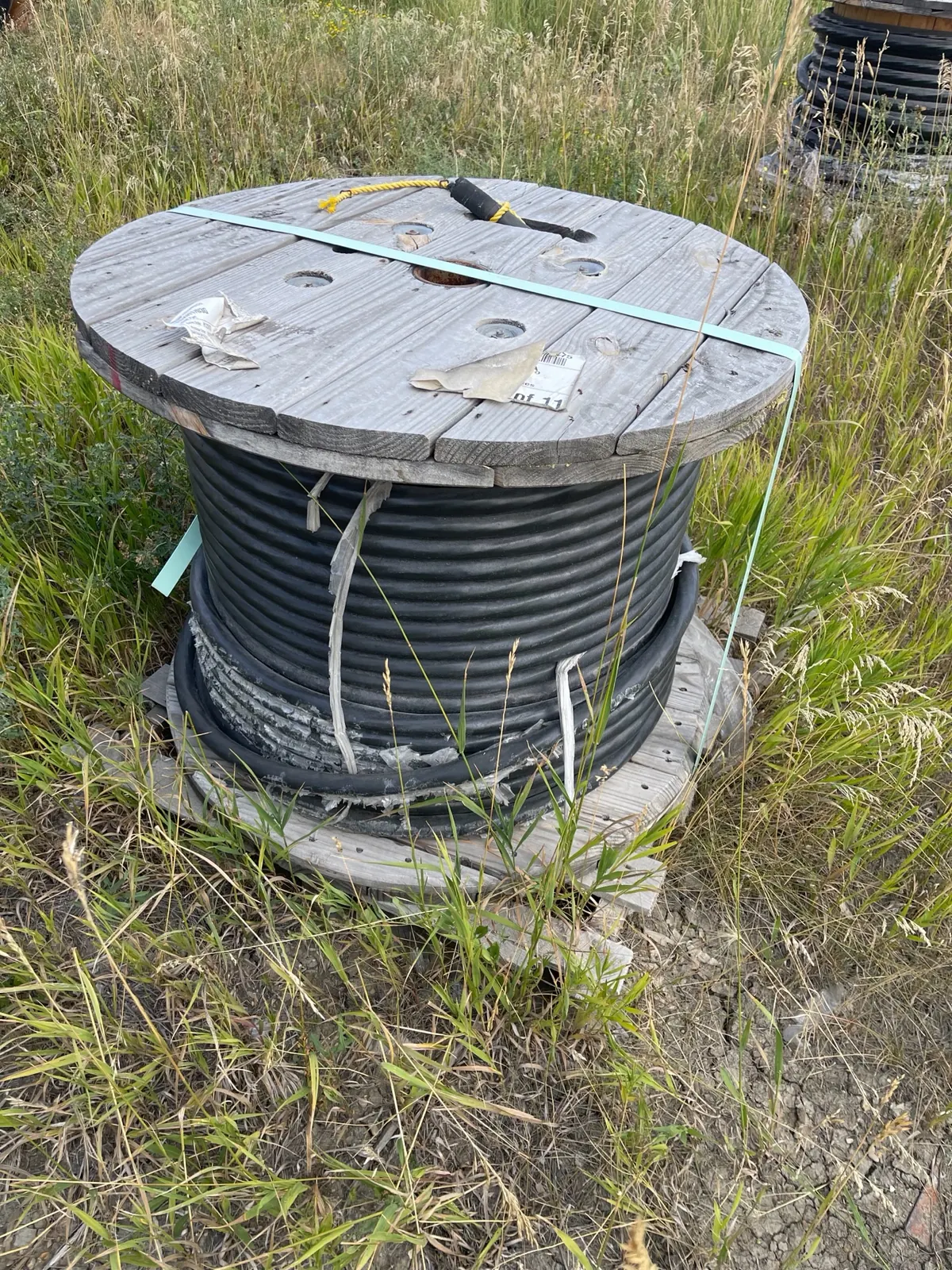
01How to Read a Wire Reel Tag: Start with Product Identity
Start with the manufacturer, part number, and description. Together, these fields give you a product identity to check against the wire itself. Photograph the complete tag before copying individual details, especially if the label is faded or torn.
The manufacturer identifies the product source. The part number is the manufacturer's product identifier; it is not a universal wire designation. The description may summarize conductor size, material, insulation type, or cable construction, but abbreviations vary.
Read the description exactly as printed rather than expanding unfamiliar abbreviations from memory. A similar-looking part number or description does not establish that two reels contain identical material.
Next, compare the tag with a readable stretch of jacket print. If they disagree, record both rather than choosing one. A reel may have been reused or its contents changed. Our wire types overview can help organize the material for review, but identification still depends on the actual markings.
02Separate Footage, Weight, and Reel Identification
Find the footage and weight fields, then note the units and any qualifying words. Footage on an original tag generally describes the packaged quantity when labeled, not a verified balance after wire has been removed. Treat it as a starting point for a partial reel.
Weight needs context. Gross weight includes packaging, while net weight excludes packaging as defined on the label. Do not treat an unlabeled weight as conductor weight or convert it directly into footage without reliable product information.
The reel number identifies the reel or packaged unit. It is different from a part number, which identifies a product, and a lot number, which supports production traceability.
Photograph any handwritten balance separately from the printed label and explain whether it was measured or estimated. For partially used material, follow our guide to estimating footage left on a reel. Keep estimates clearly labeled so an offer review does not mistake them for confirmed quantities.
03Record Manufacture Dates, Lot Numbers, and Date Codes
A manufacture date and lot number help trace the material to production records. Copy them exactly, including letters, punctuation, and leading characters. The reel number, lot number, and date code serve different purposes even when they appear together on the label.
Some labels show a readable manufacture date; others use a coded format. Jacket date codes may also require manufacturer information to interpret. Do not assume every manufacturer uses the same sequence or that a code represents a calendar date you can decode by inspection.
A date alone does not prove that wire is reusable or unsuitable. Storage history, packaging condition, and visible damage also matter. Keep any available product paperwork with the reel, especially if it explains a code.
For a surplus review, send the date and lot as shown rather than translating an uncertain code. Manufacturer and date code are among the factors Houston Wire Buyers considers when reviewing material and preparing an offer.
04Understand Wire Jacket Markings and the Cable Print Legend
The meaning of wire jacket markings becomes clearer when you separate the cable print legend into individual fields. Look for conductor size, conductor material, type designation, voltage rating, certification markings, and production information. Not every product presents these details in the same order.
Record the size exactly, including AWG or kcmil where printed. Identify copper or aluminum from explicit markings or reliable product documentation, not jacket color alone. For multiconductor cable, preserve the complete construction description rather than reporting only one size.
The type designation identifies a wire or cable category. It should not be treated as permission to use that cable in any location. Voltage markings identify a rating, not the operating voltage of a previous installation.
Our wire sizes overview helps you organize size information for a sale. For circuit sizing, location suitability, or installation decisions, have a licensed electrician or engineer evaluate the complete product markings and applicable requirements.
05Read UL Markings Without Assuming Installation Approval
Record any UL marking together with the nearby type designation and other identifying text. A certification mark has a specific scope; the presence of the letters UL does not establish that a cable is suitable for every electrical application.
Photograph the complete marking rather than cropping it down to the certification letters. If accompanying identifiers are present, include them. Product documentation may be needed to establish exactly what the marking covers.
Do not add an NEC use designation or an ICEA compliance claim that is absent from the label and supporting documentation. Reel descriptions, sales shorthand, and certification markings are not interchangeable evidence.
For selling surplus, the practical task is to preserve legible identification and disclose uncertainty. Houston Wire Buyers reviews material for reuse potential, not installation approval. A licensed electrician or engineer should determine whether a particular cable meets the requirements of a proposed installation, using the applicable code and product information.
06Check Footage Marks and Photograph Conflicting Details
Footage marks along the jacket can help assess length, but first confirm what the markings represent. A production code is not necessarily a length mark. Read the units and check whether a visible sequence increases or decreases along the cable.
When confirmed sequential length marks are readable at both accessible ends, their difference can help estimate the intervening length. Record the markings exactly and note any missing or unreadable print. Do not assume a single visible mark states how much wire remains on the reel.
Avoid unwinding a heavy reel just to locate another mark. Photograph the accessible jacket, complete reel, tag, and any exposed ends safely. Keep conflicting information visible rather than editing it out.
Our wire photography guide explains how to present material for review. Useful photos connect the label to the actual wire and show packaging condition, damage, and whether the reel appears full or partially used.
07Use Reel and Jacket Information to Sell Surplus in Houston
Send Houston Wire Buyers photos of the reel tag and jacket print, footage or weight, and your Greater Houston location. Include any mismatch, uncertain estimate, or visible damage. We buy new, unused and reusable surplus wire; short, burned, cut, or heavily damaged material may be better suited to scrap, and we will tell you what is reusable.
We review the information, provide a written offer, and schedule pickup or drop-off. Material is verified on site, with payment per the written offer. Pricing considers conductor metal, type and demand, size, footage, packaging condition, manufacturer, date code, quantity, and pickup logistics.
To request an offer for surplus wire, call or text 951-403-5738 or email industrial832@gmail.com. Service is Greater Houston only. Drop-off at 6402 McGrew St, Houston, TX 77087 is by appointment; call first. The location is in southeast Houston's Mayfair area, near I-45 and I-610.
FAQQuestions sellers ask
Can you review a reel if its tag is missing?
Send clear jacket-print photos, views of the reel and wire ends, and any available packaging or paperwork. Explain that the original tag is missing. Those details may support identification, but do not assign a manufacturer or product number based only on a similar-looking reel.
Should I remove old labels or clean faded jacket print?
Leave labels attached and avoid cleaning methods that could damage insulation or erase markings. Try better lighting and photographs from different angles first. Include a wider view showing where the label belongs, then a close-up. Preserve uncertain characters rather than rewriting them as confirmed information.
How should I document several reels with similar labels?
Keep each reel's tag, jacket photos, and quantity information together. Use your own temporary photo reference to distinguish reels, without covering original markings. Similar labels do not prove identical footage, dates, or condition. Tell us which photos belong to each reel when submitting the material.
Do bare copper coils need jacket-print photos?
Bare copper has no insulating jacket to photograph. Send any attached tag, packaging label, or supporting paperwork, plus clear views of the coil and material. Provide the available footage or weight and disclose whether it is estimated. Do not invent a cable type from appearance alone.
Is Houston Wire Buyers the manufacturer shown on my reel?
Houston Wire Buyers is a surplus wire buyer, not the manufacturer identified on your tag. We are not affiliated with Houston Wire & Cable Company or any manufacturer. Questions about proprietary part numbers or production-code formats may require the original manufacturer's documentation.