01How to Store Wire Reels Outside: Start With the Location
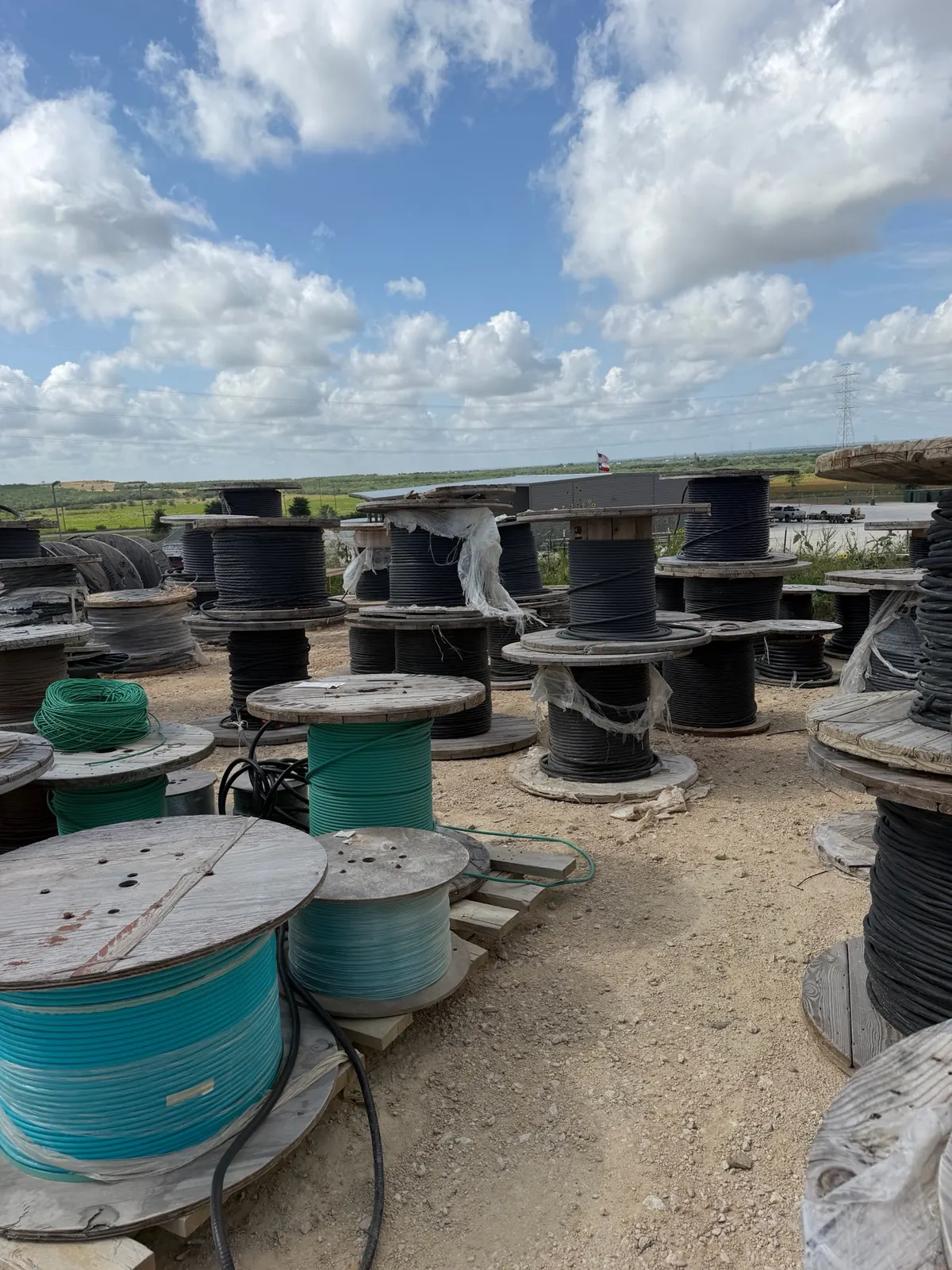
Choose a firm, well-drained storage area away from standing water and runoff paths. Elevate reels on supports rated for the load, keeping wooden flanges and cable clear of soil. A pallet is not automatically suitable: its condition, load capacity and stability matter, especially under a heavy reel.
Store reels in the orientation specified by the cable and reel manufacturer. For reels intended to stand on their flanges, use suitable chocks or restraints to prevent rolling. Keep identification tags accessible and leave room for inspection and safe handling.
Before moving inventory, review available reel weight information and plan the handling equipment. Our guide to wire reel sizes and weights explains the information to gather. Do not guess at lifting capacity or improvise supports. If the site cannot provide stable, elevated storage, covered indoor storage or selling the surplus may be the more practical choice.
02Seal Cable Ends Without Trapping Moisture
Open cable ends can admit water into spaces between conductors and beneath coverings. An intact outer jacket does not make an exposed end watertight. Inspect both accessible ends, including the inner end where it emerges from the reel, and use the cable manufacturer's recommended sealing method.
End caps must suit the cable construction and storage conditions. Tape wrapped around a dirty or wet end should not be treated as a dependable moisture barrier. Do not seal over visible contamination and assume the material is protected; ask the manufacturer how to handle suspected moisture entry.
For cable reel storage, record missing caps, damaged seals and any exposure to standing water. Photograph these conditions before making repairs so a prospective buyer can assess the material accurately. Our wire types overview can help identify the cable category, but storage instructions must come from the applicable manufacturer.
03Protect Jackets From Sunlight and Houston Heat
Do not assume every insulated wire or cable is suitable for extended sunlight exposure. Check the jacket print, reel tag and manufacturer documentation for sunlight-resistance information. A cable's suitability for wet locations does not, by itself, establish suitability for direct sunlight.
To protect wire from weather, use covered storage that shades the cable while allowing ventilation. If a temporary cover is necessary, secure it without crushing the cable or damaging the reel, and avoid arrangements that collect rainwater. Covers can conceal condensation, so lift them during inspections rather than judging condition from the outside.
Look for jacket cracking, unusual brittleness, discoloration and damaged markings. These observations warrant further evaluation; appearance alone cannot establish electrical fitness. Preserve readable jacket print and reel tags because they identify the product and support resale review. For installation or continued-use decisions, consult the manufacturer and a licensed electrician or engineer.
04Inspect Wooden Reels and Rotate Only as Directed
Houston humidity can keep wooden reels damp, particularly where supports, covers or debris restrict drying. Inspect flanges, drum surfaces and accessible hardware for rot, splitting, looseness and distortion. A deteriorated reel may no longer support normal lifting, transport or payout, even when the cable itself looks sound.
Do not roll a weakened reel to test its condition. Isolate unstable material and have a qualified handler determine how it can be moved safely. Keep vegetation and debris away from the storage area so you can see deterioration and maintain drainage.
Follow manufacturer instructions on periodic reel rotation or repositioning. Rotation is not a universal cure for moisture or wood decay, and heavy reels require appropriate handling equipment. Record inspections and any movement. If footage records are missing, use our guide to estimating footage left on a reel without unnecessarily unwinding cable into the weather.
05Prepare for Flooding and Hurricane-Season Weather
Elevating a reel helps with routine ground moisture, but it does not make a flood-prone location safe. Review where water collects on the property and where runoff travels during heavy rain. If flooding is foreseeable, arrange relocation to suitable protected storage before conditions deteriorate.
Check restraints, loose covers and access routes as part of hurricane-season preparation. Wind can displace coverings, while waterlogged ground can undermine supports. Do not attempt reel handling during hazardous weather, and do not rely on a tarp as protection against floodwater.
After a storm, document water levels, displaced reels, broken seals and visible damage. Separate potentially affected material from inventory with a known storage history. Flood exposure can introduce contamination and hidden moisture; drying the exterior does not prove the cable is fit for reuse. Disclose the exposure when requesting a purchase review, and defer electrical suitability questions to the manufacturer and qualified professionals.
06Keep Records That Preserve Surplus Wire Value
Good storage records help distinguish reusable surplus from material with uncertain condition. Keep photos of reel tags and jacket print, along with footage or weight, manufacturer, date code and storage history. Update the record when seals fail, reels deteriorate or material experiences significant weather exposure.
Avoid unnecessary cutting or unwinding just to inspect inventory. Preserve original packaging where practical, and keep partial reels organized so cable identification remains clear. Document what you know rather than estimating condition from a clean outer wrap.
Selling sooner limits additional exposure; it does not guarantee a particular price. Houston Wire Buyers evaluates conductor metal, cable type and demand, size, footage, packaging condition, manufacturer and date code, quantity and pickup logistics. Reusable wire is usually worth more than melt value. Our guide to selling surplus wire in Houston explains how to prepare useful information before requesting an offer.
07Apply These Storage Checks Before Selling in Houston
Before requesting an offer, photograph the full reel, tag, jacket print, cable ends and any storage damage. Include footage or weight and the pickup location. Houston Wire Buyers focuses on new, unused and reusable surplus copper and aluminum wire, including full reels, partial reels, cut lengths, coils and boxes.
Short pieces, burned cable and heavily damaged material may be better suited to scrap. Cut lengths are not automatically scrap; identification, usable length and condition matter. We will tell sellers what appears reusable rather than treating every reel as suitable for resale.
Request a written offer by texting 951-403-5738 or emailing industrial832@gmail.com. We review the information, provide a written offer, schedule pickup or drop-off, verify material on site and pay per the offer. Scheduled wire pickup in Houston serves Greater Houston only. Drop-off at 6402 McGrew St, Houston, TX 77087, requires an appointment; call first.
FAQQuestions sellers ask
Should I remove shipping wrap before outdoor storage?
Do not assume shipping wrap is designed for long-term outdoor storage. Check the manufacturer's instructions before removing or replacing it. If the wrap is torn or holds visible water, document the condition and ask how to protect the cable without losing identification or introducing damage.
Can I stack wire reels to save yard space?
Only stack reels when the reel manufacturer permits it and the supporting surface and handling plan are suitable. Reel shape alone does not establish stacking capacity. If instructions or load information are missing, avoid improvising a stack and have a qualified material-handling professional assess the arrangement.
Does a weathered reel mean the cable is scrap?
Not necessarily. Reel condition and cable condition require separate review, although a damaged reel can complicate safe transport. Send clear photos of both. Houston Wire Buyers assesses whether the material appears reusable; weathered wood alone does not establish that the conductor or insulation is unusable.
Can electrical testing prove stored cable is reusable?
Testing may be part of an evaluation, but a single result does not resolve every concern about storage damage, contamination or product suitability. The appropriate tests depend on the cable and intended application. Have the manufacturer and a licensed electrician or engineer determine the evaluation needed.
Can Houston Wire Buyers review reels stored outside Houston?
Our service area is Greater Houston only: Harris, Fort Bend, Montgomery, Brazoria, Galveston, Chambers and Waller counties. Include the material's actual location with your photos so we can review pickup logistics. Do not transport reels to the McGrew St address without first arranging an appointment.