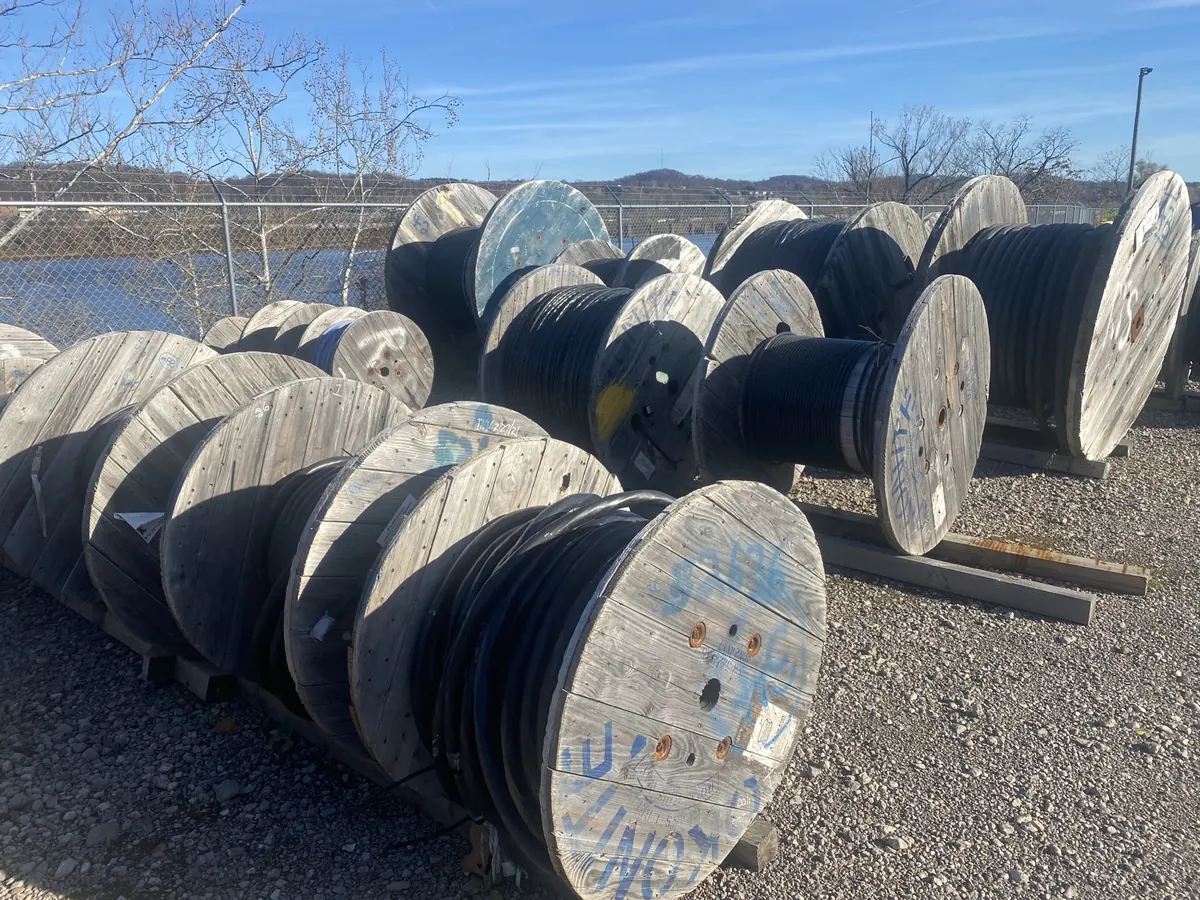
01Understanding Reel Sizes: Flange, Drum, and Traverse
A reel has separate measurements that affect storage, loading, and cable capacity. Flange diameter is the outside diameter of the circular end plates. Drum diameter measures the barrel around which the cable winds. Traverse is the usable winding width between the inside faces of the flanges.
Common flange-size examples range from 24 inches through 96 inches. Those dimensions identify the reel’s outside diameter; they do not establish footage, loaded weight, or equipment requirements. Reels with the same flange diameter can have different barrels and winding widths.
When recording cable reel dimensions, label each measurement rather than sending an unexplained list. Include overall outside width separately because it affects clearance through doors and onto transport equipment. Photograph the reel from the side and across its width, with the tag visible. Manufacturer drawings are preferable when available; a flange measurement alone leaves important details unresolved.
02Empty Reel Weight Versus Loaded Weight
Empty reel weight, often called tare weight, is the weight of the reel without cable. Loaded or gross weight includes both. Net cable weight is gross weight minus tare weight, provided both measurements describe the same reel and account for any additional packaging.
There is no reliable universal wooden reel weight for a given flange diameter. Lumber thickness, barrel construction, hardware, repairs, and absorbed moisture all affect it. Steel reels also vary by design. An approximate empty weight should come from the reel manufacturer or documentation for that specific construction, not an unrelated reel of similar diameter.
Without that information, mark tare weight as unknown rather than assigning a guessed value. For conductor-only estimates, the copper wire weight guide offers related context, but conductor weight does not include insulation, jackets, or the reel. Do not treat an approximate inventory weight as a verified lifting weight.
03Estimating Remaining Cable Without Relying on Reel Diameter
A large reel is not proof of a large remaining cable quantity. The barrel may occupy much of the space, the cable may be loosely wound, or the reel may hold only a partial layer. Cable outside diameter and winding pattern matter alongside the reel’s measurements.
Start with reel tags, inventory records, and any footage markings printed on the jacket. Check whether the tag describes the original shipment or the material currently remaining. A tag left on a partial reel can substantially overstate the available footage.
Use the guide to estimating footage left on a reel when records are incomplete. Label estimates clearly and explain how you reached them. For an offer review, send the available footage or weight, tag photographs, and views of the remaining windings. Do not unwind otherwise reusable cable solely to create a measurement without a suitable handling plan.
04Choosing Handling Equipment for the Actual Load
Equipment selection depends on verified loaded weight, reel dimensions, condition, and the equipment’s rated capacity for the intended configuration. Flange diameter alone cannot tell you whether a forklift, crane, reel trailer, or payout stand is suitable. Forklift capacity also depends on load position and the attachment used.
Have qualified personnel plan the move using the equipment manufacturer’s instructions. Confirm the lifting method and any axle, arbor, sling, or attachment requirements before lifting. Inspect for cracked flanges, loose hardware, damaged barrels, and cable projecting beyond the reel’s protective edges.
Keep people clear of rolling reels and suspended loads. Secure reels against movement during storage and transport, using a method appropriate to their orientation. Tell Houston Wire Buyers about access restrictions and available loading equipment when requesting scheduled wire pickup in Houston. Identifying these constraints early helps establish a workable pickup plan before equipment arrives.
05Wood and Steel Reels: Condition Matters More Than Appearance
Wood and steel reels require different condition checks, but neither material guarantees a serviceable reel. Wood can split, loosen around fasteners, or deteriorate after exposure. Steel can corrode, bend, or develop damaged welds. Inspect the barrel as well as the flanges because hidden damage can affect support for the cable.
Houston heat and humidity make storage condition especially relevant. Wet wood can change tare weight, while moisture can damage labels and obscure identification. Protect cable ends and preserve manufacturer tags without assuming that an intact reel means the cable inside is undamaged.
Follow manufacturer storage instructions for the cable and reel. Our Houston reel storage guide covers related storage considerations. For resale review, photograph structural defects, exposed cable, and the storage setting. Sound packaging supports handling and valuation, but cable identification and reusable condition remain central to whether the material is suitable for purchase.
06Checking Reel Deposits, Ownership, and Return Requirements
Before selling cable on a reel, determine whether you own the reel or must return it. A reel may be returnable under the original supplier’s terms, and a deposit may be tied to that return. Do not assume that an empty reel is disposable or that its deposit transfers with the cable.
Review the purchase invoice, packing documents, and reel markings. Ask the original supplier about ownership, return eligibility, condition requirements, and transportation responsibility. Deposit amounts and return procedures are supplier-specific; this guide does not establish a standard credit or return policy.
Tell Houston Wire Buyers about any return obligation before accepting an offer. Moving cable off a returnable reel requires suitable equipment and can affect packaging and handling. Resolve who retains the reel and how the cable will be transferred before scheduling. Houston Wire Buyers is not affiliated with Houston Wire & Cable Company or any manufacturer.
07Applying Reel Measurements When Selling Surplus in Houston
To sell surplus wire reels, send photos of reel tags and jacket print, available footage or weight, and the material’s location. Add reel dimensions, condition concerns, loading access, and any return obligation. Houston Wire Buyers serves Greater Houston only: Harris, Fort Bend, Montgomery, Brazoria, Galveston, Chambers, and Waller counties.
We review the information, provide a written offer, schedule pickup or drop-off, verify material on site, and pay per the written offer. Value depends on conductor metal markets, type and demand, size, footage, packaging condition, manufacturer and date code, quantity, and pickup logistics. Reusable wire is usually worth more than melt value; short, burned, cut, or heavily damaged material may be better suited to scrap.
Request an offer by calling or texting 951-403-5738 or emailing industrial832@gmail.com. Drop-off at 6402 McGrew St, Houston, TX 77087, near I-45 and I-610, is by appointment only. Call first.
FAQQuestions sellers ask
Does a reel tag show the reel’s dimensions or the cable’s specifications?
It may show either or both, depending on the manufacturer. Separate cable information, such as conductor size and product designation, from reel information, such as tare weight or flange diameter. Send a readable photograph of the entire tag rather than cropping individual fields; surrounding labels help establish what each value means.
Can I identify copper or aluminum cable from the reel itself?
No. Reel material, color, and size do not reliably identify the conductor inside. Use jacket print, reel tags, or manufacturer documentation to establish the cable construction. If identification remains uncertain, send clear photos and describe what records you have. Avoid damaging reusable cable just to expose a conductor.
Should I cut cable into smaller coils to make a reel easier to move?
Ask for a review before cutting. Cutting can reduce useful continuous length and change the material’s resale potential, even if smaller coils are easier to handle. Houston Wire Buyers accepts coils and cut lengths as well as reels, but suitability depends on the cable and its condition.
Does flange diameter establish the correct bend radius for cable?
No. Cable bend-radius requirements depend on its construction and the manufacturer’s instructions, and handling requirements can differ from installed conditions. The barrel supports the innermost cable windings, not the flange edge. For design, installation, or suitability questions, consult the cable manufacturer and a licensed electrician or engineer.
What should I send if the reel tag is missing?
Photograph readable jacket markings, the complete reel, cable ends if already accessible, and any visible damage. Include available inventory records, estimated footage or weight, and location. State which details are uncertain. Missing tags do not justify guessing the manufacturer, date code, cable rating, or remaining quantity.