01How to Read the Wire Ampacity Chart
Start with the conductor material, then find its size in the displayed table. Read across that row to the applicable insulation temperature column. The resulting value is a starting ampacity under the table’s stated conditions, not automatic approval for a circuit or installation.
Keep the table heading, notes and applicable NEC edition with any value you record. NEC 310.16 covers specified insulated conductors under defined installation conditions; it is not a universal reference for every cable assembly, flexible cord, utility application or wiring method. Other requirements may govern the material you have.
A useful reading sequence is material, size, insulation rating, termination limits and installation conditions. Do not skip directly from gauge to breaker size. If the size markings are unfamiliar, consult the Wire Gauge Chart before selecting a row. A licensed electrician or engineer should verify the final selection against the applicable code and equipment requirements.
| Size | Cu 60 °C | Cu 75 °C | Cu 90 °C | Al 75 °C | Al 90 °C |
|---|---|---|---|---|---|
| 18 AWG | 6 A (fixture wire, NEC 402.5) | ||||
| 16 AWG | 8 A (fixture wire, NEC 402.5) | ||||
| 14 AWG | 15 | 20 | 25 | — | — |
| 12 AWG | 20 | 25 | 30 | 20 | 25 |
| 10 AWG | 30 | 35 | 40 | 30 | 35 |
| 8 AWG | 40 | 50 | 55 | 40 | 45 |
| 6 AWG | 55 | 65 | 75 | 50 | 55 |
| 4 AWG | 70 | 85 | 95 | 65 | 75 |
| 3 AWG | 85 | 100 | 115 | 75 | 85 |
| 2 AWG | 95 | 115 | 130 | 90 | 100 |
| 1 AWG | 110 | 130 | 145 | 100 | 115 |
| 1/0 AWG | 125 | 150 | 170 | 120 | 135 |
| 2/0 AWG | 145 | 175 | 195 | 135 | 150 |
| 3/0 AWG | 165 | 200 | 225 | 155 | 175 |
| 4/0 AWG | 195 | 230 | 260 | 180 | 205 |
| 250 kcmil | 215 | 255 | 290 | 205 | 230 |
| 300 kcmil | 240 | 285 | 320 | 230 | 260 |
| 350 kcmil | 260 | 310 | 350 | 250 | 280 |
| 400 kcmil | 280 | 335 | 380 | 270 | 305 |
| 500 kcmil | 320 | 380 | 430 | 310 | 350 |
| 600 kcmil | 350 | 420 | 475 | 340 | 385 |
| 750 kcmil | 400 | 475 | 535 | 385 | 435 |
| 1000 kcmil | 455 | 545 | 615 | 445 | 500 |
Small-conductor limits in NEC 240.4(D) cap 14 AWG copper at 15 A, 12 AWG at 20 A and 10 AWG at 30 A. Apply correction and adjustment factors and termination limits; consult a licensed electrician.
02Match the Copper or Aluminum Column to the Conductor
Copper and aluminum have separate ampacity entries. Select the column for the actual conductor metal rather than guessing from the cable’s outside diameter, jacket color or overall weight. Insulation thickness and cable construction can make different conductors look similar from the outside.
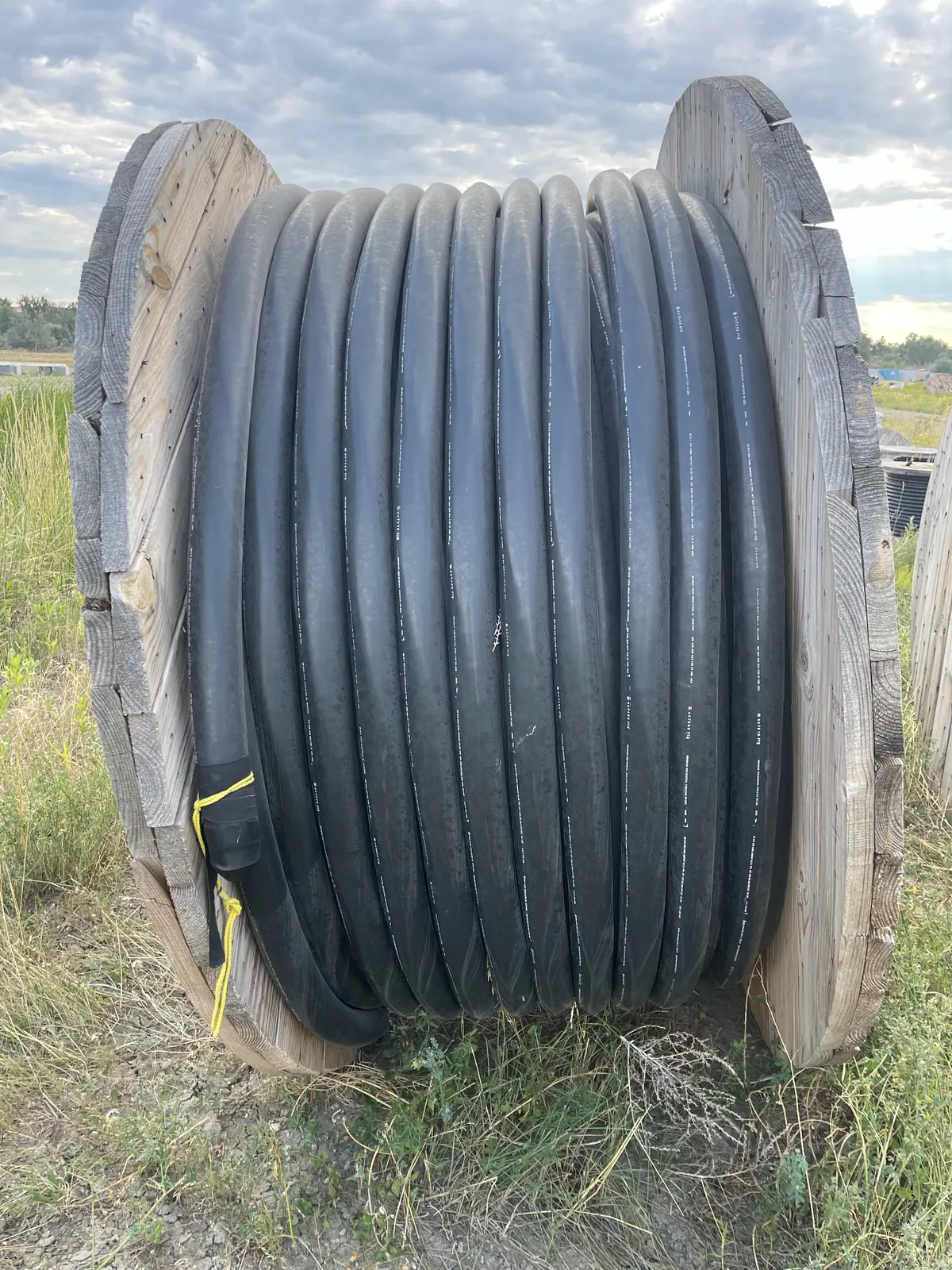
Use the reel tag, jacket print and manufacturer documentation to identify material and size. For assemblies containing different conductor sizes, identify each relevant conductor rather than assigning one ampacity to the whole assembly. A cable’s trade description alone may not establish which table applies.
Our Copper vs. Aluminum Wire guide explains the material distinction. For surplus identification, keep the original tag and packaging whenever possible. Houston Wire Buyers reviews copper and aluminum material, but a purchase offer does not establish electrical suitability. The material must still be appropriate for its intended wiring method, terminals and installation conditions.
03Temperature Columns and Termination Limits
The temperature columns correspond to conductor insulation temperature ratings under the table’s conditions. They do not mean that every conductor can use the highest listed ampacity, or that the surrounding air may reach that temperature without affecting the calculation. Read the conductor markings before choosing a column.
Equipment terminations are a separate limit. A conductor with higher-temperature insulation may connect to equipment whose terminals require a lower-temperature ampacity basis. Use the applicable termination requirements and equipment markings; insulation rating alone does not override them.
Where the NEC permits, the higher insulation-temperature column can provide the starting value for adjustment or correction calculations. The resulting allowable ampacity must still satisfy the applicable termination limit. This distinction matters when interpreting a wire amp rating chart: the visible highest value may not be the usable value. Ask a licensed electrician or engineer to resolve unclear terminal markings or equipment instructions.
04When Ampacity Requires Correction or Adjustment
The table assumes stated installation conditions. Higher ambient temperatures can require temperature correction, while multiple current-carrying conductors grouped in a raceway or cable can require ampacity adjustment. Both can apply to the same installation, so checking only one may leave the calculation incomplete.
Conductor counting also requires judgment under the applicable NEC rules. Do not assume that every conductor counts identically, or that every neutral is excluded. Circuit arrangement and conductor function affect that determination. Routing through different environments may introduce additional requirements that a simple chart lookup cannot resolve.
Document the wiring method, ambient conditions and grouping before asking for a design review. The Wire Types guide can help identify the material category, but identification is not a derating calculation. For Houston installations, use actual site conditions rather than a general assumption about local weather. Have a licensed electrician or engineer determine the required corrections and adjustments.
05Three Worked Examples Using the Displayed Table
These examples show the lookup sequence without assigning a current value outside the displayed data. In each case, read the actual table entry and its notes before proceeding.
- Copper reel: A readable tag identifies copper, conductor size and insulation type. Find that size in the copper portion, then locate the supported temperature column. Check the receiving equipment’s termination limit before treating that entry as usable ampacity.
- Aluminum reel: The tag identifies aluminum. Use the aluminum entry for its size—not the copper entry in the same row. Confirm terminal compatibility and the applicable temperature basis before reviewing installation corrections.
- Grouped conductors: The material, size and insulation are known, but the installation groups current-carrying conductors. Start with the appropriate table entry, apply required adjustments and corrections, then check the termination limit.
Each example ends with verification, not a breaker recommendation. Missing markings or installation details prevent a reliable final selection.
06What Ampacity Does Not Tell You
Ampacity addresses a conductor’s current-carrying capability under defined conditions. It does not independently establish voltage drop, suitability for a location, equipment compatibility or the correct overcurrent protection. Circuit purpose and other NEC provisions may affect conductor selection even after the table lookup is complete.
Likewise, a larger conductor is not automatically suitable for every application. Terminals must accept the conductor’s size and material, and the insulation and cable construction must suit the installation. Medium-voltage cable, flexible products and specialty assemblies may require references beyond this table.
Treat NEC 310.16 ampacity as one part of a design review rather than a complete specification. For a practical handoff, provide the electrician or engineer with conductor markings, equipment information, circuit purpose, route and installation conditions. Browse our wire reference guides for identification help, but use qualified design advice for installation decisions. Never infer a safe circuit rating from appearance alone.
07How Ampacity Information Helps When Selling Houston Surplus
Clear size, metal and insulation markings help us identify surplus wire; an ampacity claim alone does not. Houston Wire Buyers purchases new, unused and reusable copper and aluminum material from 18 AWG to 1000 kcmil. We review full reels, partial reels, cut lengths, coils and boxes throughout Greater Houston only.
Send photos of reel tags or jacket print, footage or weight, and location through Get an Offer. We review the information, provide a written offer, schedule pickup or drop-off, verify material on site and pay per the written offer. Pricing considers metal market, type, demand, size, footage, condition, manufacturer, date code, quantity and pickup logistics.
Reusable material is usually worth more than melt value. Short, burned or heavily damaged wire may be better suited to scrap; we will identify what is reusable. Call or text 951-403-5738 before an appointment-only drop-off at 6402 McGrew St, near I-45 and I-610.
FAQQuestions sellers ask
Why do different online ampacity charts show different results?
Charts may use different NEC editions, wiring methods, conductor materials or temperature assumptions. Some omit notes that explain their limits. Compare the source, table heading and conditions before comparing values. If those details are absent, do not use the chart as the sole basis for an installation decision.
Can I use this chart for an extension cord or flexible cable?
Do not assume NEC 310.16 applies to every flexible product. Flexible cords and other cable categories can have separate ampacity requirements based on construction and use. Identify the exact product from its markings and documentation, then have a licensed electrician or engineer select the appropriate reference.
Can an ampacity chart tell me whether old surplus wire is reusable?
No. A chart cannot reveal insulation damage, storage exposure or whether the markings accurately describe the material. Keep tags and packaging, and photograph the wire’s condition. Houston Wire Buyers reviews reusable surplus, but our material review is not certification that wire is suitable for a particular installation.
Should I energize surplus wire to demonstrate its capacity before selling?
No. An energized test is not part of our stated offer process, and improvised testing can create electrical hazards. Send identification photos, footage or weight, and your location instead. If electrical testing is necessary for another purpose, have a qualified professional determine the appropriate procedure.
Is Houston Wire Buyers affiliated with Houston Wire & Cable Company?
No. Houston Wire Buyers is not affiliated with Houston Wire & Cable Company or any manufacturer. We buy reusable surplus in Greater Houston. For material questions or an offer request, call or text 951-403-5738 or email industrial832@gmail.com with identification photos and the material’s location.