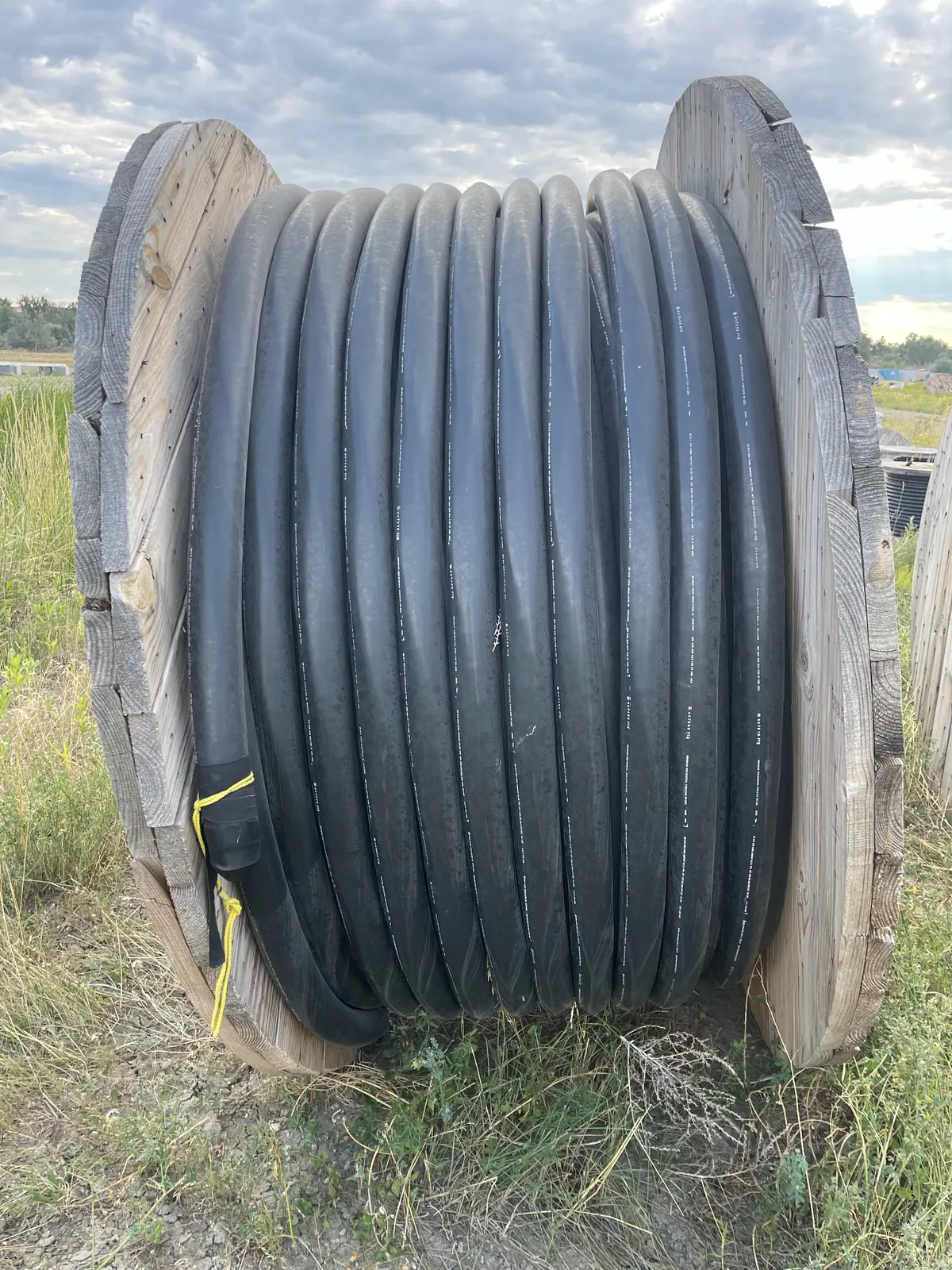
01How to Read the Wire Gauge Chart
Start with the size designation, then read across the displayed table for conductor diameter, cross-sectional area and strand count. Check the column headings and units before comparing entries. Diameter describes a distance across the conductor; area describes its conducting cross section. Those measurements are related, but they are not interchangeable.
Treat strand-count entries as construction information, not a universal requirement for every wire bearing that size. A solid conductor and a stranded conductor can share a nominal size while having different physical constructions. A chart entry does not replace the manufacturer’s product data.
This wire size chart is an identification reference, not an installation specification. It cannot establish allowable ampacity, insulation suitability or an acceptable termination by itself. For an overview of the material we purchase, see our surplus wire sizes. Keep the reel tag with the wire whenever possible.
| Size | Area (kcmil) | Area (mm²) | Solid dia. (in) | Strands / dia. (in) | THHN OD (in) |
|---|---|---|---|---|---|
| 18 AWG | 1.62 | 0.823 | 0.04 | 7 / 0.046 | 0.084 |
| 16 AWG | 2.58 | 1.31 | 0.051 | 7 / 0.058 | 0.096 |
| 14 AWG | 4.11 | 2.08 | 0.064 | 7 / 0.073 | 0.111 |
| 12 AWG | 6.53 | 3.31 | 0.081 | 7 / 0.092 | 0.13 |
| 10 AWG | 10.38 | 5.26 | 0.102 | 7 / 0.116 | 0.164 |
| 8 AWG | 16.51 | 8.37 | 0.128 | 7 / 0.146 | 0.216 |
| 6 AWG | 26.24 | 13.3 | 0.162 | 7 / 0.184 | 0.254 |
| 4 AWG | 41.74 | 21.2 | 0.204 | 7 / 0.232 | 0.324 |
| 3 AWG | 52.62 | 26.7 | 0.229 | 7 / 0.26 | 0.352 |
| 2 AWG | 66.36 | 33.6 | 0.258 | 7 / 0.292 | 0.384 |
| 1 AWG | 83.69 | 42.4 | 0.289 | 19 / 0.332 | 0.446 |
| 1/0 AWG | 105.6 | 53.5 | 0.325 | 19 / 0.372 | 0.486 |
| 2/0 AWG | 133.1 | 67.4 | 0.365 | 19 / 0.418 | 0.532 |
| 3/0 AWG | 167.8 | 85 | 0.41 | 19 / 0.47 | 0.584 |
| 4/0 AWG | 211.6 | 107 | 0.46 | 19 / 0.528 | 0.642 |
| 250 kcmil | 250 | 127 | — | 37 / 0.575 | 0.711 |
| 300 kcmil | 300 | 152 | — | 37 / 0.63 | 0.766 |
| 350 kcmil | 350 | 177 | — | 37 / 0.681 | 0.817 |
| 400 kcmil | 400 | 203 | — | 37 / 0.728 | 0.864 |
| 500 kcmil | 500 | 253 | — | 37 / 0.813 | 0.949 |
| 600 kcmil | 600 | 304 | — | 61 / 0.893 | 1.051 |
| 750 kcmil | 750 | 380 | — | 61 / 0.998 | 1.14 |
| 1000 kcmil | 1000 | 507 | — | 61 / 1.152 | 1.311 |
Values from NEC Chapter 9 Tables 5 and 8; THHN diameters are approximate.
02Understanding the AWG System
AWG means American Wire Gauge. Within the numbered AWG range, a lower gauge number identifies a larger nominal conductor cross-sectional area. The numbering runs opposite to what someone unfamiliar with electrical wire might expect: a higher gauge number does not mean a heavier conductor.
Use the AWG chart to compare nominal conductor size, rather than judging wire by how thick its insulation looks. Insulation and outer jackets add to the finished diameter without adding conductor area. Copper and aluminum also have different electrical and weight characteristics, so a size designation alone does not establish equivalent performance.
When identifying surplus, look for the size printed on the jacket or reel tag. Record the conductor metal and wire type alongside it. Our reel-tag and jacket-print guide explains what to photograph so we can review the material without relying on appearance alone.
03Aught Sizes and the Transition to kcmil
Aught sizes extend the AWG system beyond its ordinary numbered gauges. You may hear these sizes described verbally as “aught” or “ought,” while tags use slash-zero notation. Copy the complete marking rather than shortening it; dropping part of the designation can change the identified size.
Larger conductors are commonly identified in kcmil instead of AWG. A kcmil designation expresses conductor cross-sectional area in thousands of circular mils. MCM is an older designation used for the same area unit, and it still appears on some tags, specifications and surplus inventory records.
The kcmil chart helps you interpret those area-based markings alongside AWG entries. It does not mean that a kcmil value is a diameter measurement. When preparing a material list, preserve the original tag wording and note whether it says AWG, kcmil or MCM. Clear units prevent avoidable identification errors.
04Diameter, Area and Strand Count Are Different Measurements
For a solid round conductor, diameter describes the metal itself. For stranded wire, distinguish the diameter of an individual strand from the overall diameter of the assembled conductor. Neither measurement should be confused with the outside diameter of the insulation or cable jacket.
Cross-sectional area describes conductor size, while strand count describes how that conductor is assembled. Different strand arrangements and compacted constructions can affect physical diameter. More strands do not automatically mean a larger nominal gauge, and strand count alone does not establish flexibility or suitability for a particular application.
Read the table’s construction notes before treating any listed strand count as a match for your material. Confirm uncertain details against manufacturer documentation. Our wire type overview can help separate building wire, flexible cable and other categories, but a licensed electrician or engineer should resolve design and installation questions.
05Three Practical Examples for Reading Size Markings
Example: 18 AWG identification. If a reel tag says 18 AWG, locate that size in the table. Read its diameter and area columns, then check whether the listed construction matches the actual wire. Do not assume a strand count solely from the gauge.
Example: 1000 kcmil identification. If the jacket says 1000 kcmil, use the kcmil portion of the table. The designation refers to conductor area, not the finished cable diameter. Record any MCM wording exactly as it appears on the tag.
Example: copper versus aluminum. Two conductors marked 18 AWG share the same nominal gauge designation, but changing the metal changes other properties. Do not infer equal weight or allowable current from size alone. For a separate reference on metal weight, consult the copper wire weight chart, and use actual footage or weight when describing surplus.
06What a Size Chart Cannot Tell You About Installation
Conductor size is only part of an electrical specification. Allowable ampacity also depends on conductor metal, insulation temperature rating, installation conditions and applicable code requirements. A diameter or area entry cannot tell you whether a conductor is suitable for a particular circuit, raceway or terminal.
Likewise, a matching gauge does not make two cable products interchangeable. Their insulation, jacket, conductor construction and intended applications may differ. Use the complete product markings and manufacturer documentation when checking a specification, not just the size column in this guide.
For current-carrying reference information, see the wire ampacity chart based on NEC 310.16. Keep that information separate from this dimensional chart. A licensed electrician or engineer should determine conductor selection, required adjustments and installation suitability. If markings are unreadable, describe the uncertainty rather than assigning a rating from appearance.
07Using Wire Size Information to Sell Surplus in Houston
Accurate size information helps us review surplus without mistaking jacket thickness for conductor size. Send photos of reel tags or jacket print, footage or weight, and your location. We review the material, provide a written offer, schedule pickup or drop-off, verify it on site, and pay per the written offer.
Value depends on conductor metal, type and demand, size, footage, packaging condition, manufacturer, date code, quantity and pickup logistics. Reusable wire is usually worth more than melt value. Short, burned or heavily damaged material may be better suited to scrap; we will tell you what is reusable.
We serve Greater Houston only. Pickup is scheduled at your site; drop-off at 6402 McGrew St, near I-45 and I-610 in southeast Houston’s Mayfair area, requires an appointment. Request a surplus wire offer, call or text 951-403-5738, or email industrial832@gmail.com.
FAQQuestions sellers ask
What should I do if the reel tag and jacket print show different sizes?
Photograph both markings and explain where each came from. Do not assume the reel still holds its originally labeled material, especially if wire has been transferred or combined. Keep the items separate until their identity is resolved. We review the information you provide and verify material on site before payment.
Can I identify an unmarked wire by measuring its outside diameter?
An outside measurement can document the material, but it is not enough to establish gauge. Insulation thickness, jackets and conductor construction affect that measurement. Send clear photos of the wire and any remaining packaging. Describe the size as unknown rather than presenting a measurement-based guess as a confirmed designation.
How should I label surplus cable that contains multiple conductors?
Preserve the complete cable marking rather than listing only one conductor’s gauge. Photograph any information identifying conductor sizes, conductor count, cable type and manufacturer. Include the available length or weight separately. This helps distinguish a cable assembly from individual insulated conductors and avoids an incomplete description of the surplus.
Will you review a lot containing several wire sizes?
Yes. Houston Wire Buyers buys reusable surplus across the stated range of 18 AWG to 1000 kcmil. For a mixed lot, group photos and quantity information by identifiable material where practical. Include your Greater Houston location so we can consider pickup logistics along with the wire’s condition and specifications.
Are you affiliated with Houston Wire & Cable Company?
No. Houston Wire Buyers is not affiliated with Houston Wire & Cable Company or any manufacturer. This guide helps sellers understand size information for surplus review; it is not a manufacturer’s product specification. For product-specific dimensional or construction questions, refer to documentation for the actual wire you have.