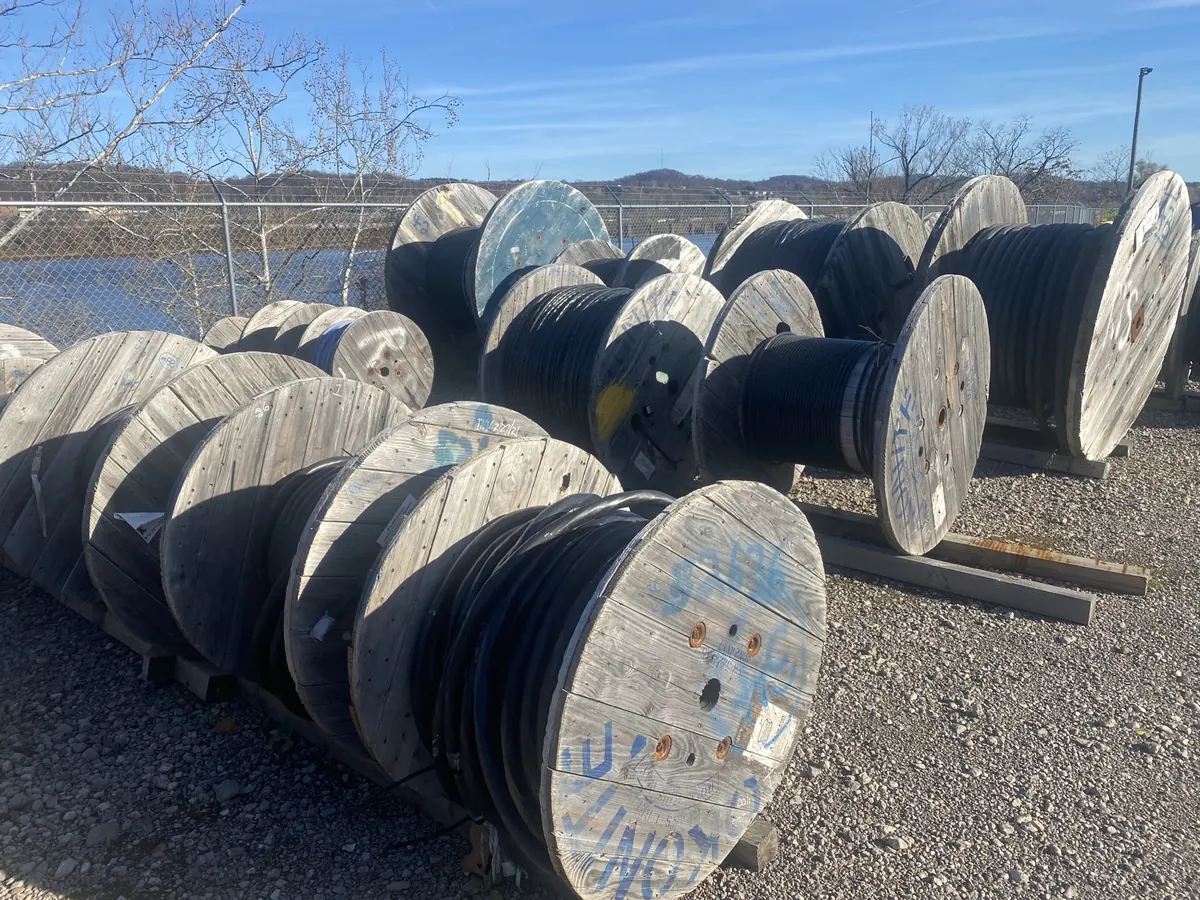
01Copper vs. Aluminum Wire: Conductivity and Ampacity
Copper conducts electricity more effectively than aluminum at the same conductor cross-sectional area. That difference generally lets a copper conductor carry a comparable load with a smaller physical size. It does not mean every copper cable has more usable ampacity than every aluminum cable.
Ampacity also depends on insulation, installation conditions, ambient temperature, conductor grouping and equipment termination ratings. A jacket marking alone does not establish the allowable load for a particular installation. Compare the complete conductor specification and applicable NEC requirements, not just the metal.
Our wire ampacity guide explains how NEC 310.16 fits into that review. Its tabulated values are a starting point, not a substitute for checking adjustment factors and installation rules. When sorting surplus, keep copper and aluminum separated and photograph the printed specifications. That makes it easier to identify what you have without assuming the two materials are interchangeable.
02Size Equivalents: Understanding the Residential Service Example
A familiar comparison is 4/0 aluminum versus 2/0 copper for a 200 A residential service. That example depends on qualifying dwelling-service or feeder provisions in the NEC, including whether the conductors supply the dwelling's entire load. It is not a blanket equivalency for every feeder, commercial installation or wiring method.
Read the comparison as two different conductor sizes that may serve the same qualifying application—not as equal metal content or universally equal ampacity. A larger aluminum conductor also affects how the material fits equipment terminals and raceways, so swapping materials requires more than changing a purchase order.
Use the wire gauge guide to identify AWG and kcmil markings before comparing reels. Record the actual size, conductor metal and insulation designation. Have a licensed electrician or engineer confirm the applicable sizing rule, terminal suitability and installation requirements before using either conductor in a service.
03Weight and Cost: Compare the Complete Job
Aluminum is lighter than copper, although it generally requires a larger conductor for a comparable electrical load. That can matter when handling reels, transporting material and planning conductor pulls. Reel weight also includes insulation, jackets and packaging, so gross weight is not a direct measure of conductor metal.
Aluminum often has a lower material cost than a copper alternative. The installed cost still depends on conductor size, suitable connectors, equipment compatibility, raceway requirements and labor. A lower reel price does not automatically make a substitution economical or appropriate.
For surplus evaluation, send footage when available and identify whether a reported weight includes the reel. We review those details alongside conductor specifications and condition. Our aluminum wire buying page covers material we consider. Keep the original reel tag attached whenever possible; it helps distinguish a known, usable product from an unidentified length of cable.
04What AA-8000 Aluminum Wire Tells You
AA-8000 aluminum wire uses an electrical-conductor alloy from the AA-8000 series. It is distinct from older aluminum conductor alloys associated with historical branch-circuit concerns. The alloy designation matters, but it does not independently establish a cable's insulation type, listing, allowable ampacity or suitability for a particular installation.
Look for manufacturer documentation, reel tags and jacket markings that identify the product. Do not assume every aluminum conductor is AA-8000, especially when reviewing utility or specialty cable. Different products can use different conductor materials and construction standards.
Applicable UL product standards and ICEA cable specifications address particular constructions and performance requirements; neither replaces the installation requirements of the NEC. For resale, documented alloy and product information help us evaluate the material accurately. If markings are incomplete, send clear photos rather than guessing. A licensed electrician or engineer should determine whether an identified cable fits the intended application.
05Terminations: Match the Connector to the Conductor
Copper and aluminum require terminations identified for the conductor material, size and construction involved. A connector suitable for copper is not automatically suitable for aluminum. Equipment markings and manufacturer instructions govern whether a terminal accepts either metal and how the connection must be prepared.
Aluminum connections need particular attention to surface preparation and installation instructions. Use oxide-inhibiting compound when required by the connector or equipment manufacturer; it is not a universal instruction for every aluminum termination. Tighten connections to the specified torque using the appropriate procedure and tools.
Do not treat an attached lug as proof that a surplus cable assembly is ready for reuse. Check identification, physical condition and compatibility with the intended equipment. When sending photos, include connector markings and visible damage. Houston Wire Buyers can review assemblies as surplus material, but installation suitability and final connection work belong with a licensed electrician or engineer.
06Resale Value: Metal Matters, but Usability Matters Too
For aluminum vs. copper wire value, copper generally has greater metal value by weight. A reusable aluminum reel can still have meaningful resale value because a buyer may need its specific size, construction and footage. Comparing unlike reels solely by weight misses that distinction.
Houston Wire Buyers bases offers on the conductor metal market, wire type and current demand, size, footage, reel or packaging condition, manufacturer, date code, quantity and pickup logistics. We do not apply one universal value relationship to every copper and aluminum product.
Our surplus value versus scrap price guide explains why reusable wire is usually worth more than melt value. Short offcuts, burned wire and heavily damaged material may be better suited to scrap. Cut lengths are not automatically scrap; usable length and condition matter. Our copper wire buying page describes the reusable copper material we review.
07Selling Surplus Copper and Aluminum Wire in Houston
Start with clear photos of reel tags and jacket print, the footage or weight, and the material's location. We buy new, unused and reusable surplus building wire, cable assemblies, industrial cable, utility and medium-voltage cable, flexible cable, bare copper and specialty cable. Material can be on full or partial reels, in coils or boxes, or in reusable cut lengths.
Use our offer request page or call or text 951-403-5738. You can also email industrial832@gmail.com. We review the information, provide a written offer, schedule pickup or drop-off, verify material on site and pay per the written offer.
We serve Greater Houston only: Harris, Fort Bend, Montgomery, Brazoria, Galveston, Chambers and Waller counties. Scheduled wire pickup takes place at your site. Drop-off at 6402 McGrew St, Houston, TX 77087, in southeast Houston's Mayfair area near I-45 and I-610, requires an appointment. Call first.
FAQQuestions sellers ask
Should I strip reusable wire before requesting an offer?
Leave identifiable, reusable wire intact for the initial review. Removing insulation eliminates jacket markings and changes the product from insulated wire to bare conductor. Send photos first so we can assess its reusable condition. We focus on usable material and will tell you when the wire appears better suited to scrap.
Can you review a lot containing both copper and aluminum?
Yes. Houston Wire Buyers buys both conductor metals. Identify each reel, coil or box separately when possible, with its own photos and footage or weight. That helps us review the lot without treating different metals, sizes and cable constructions as one undifferentiated quantity.
Does an older date code automatically make wire scrap?
No. Manufacturer and date code are pricing factors, but age alone does not determine whether material is reusable. Identification, condition, construction and current demand also matter. Send the tag and jacket photos, and disclose storage damage or deterioration rather than assuming an older reel has only melt value.
What if the reel label does not show how much wire remains?
Tell us that the remaining footage is unknown and provide the available weight, if you have it. Include photos of the reel and readable jacket print. Do not present the original reel footage as the remaining amount when material has been removed; accurate information supports the review and on-site verification.
Is Houston Wire Buyers part of Houston Wire & Cable Company?
No. Houston Wire Buyers is not affiliated with Houston Wire & Cable Company or any manufacturer. We buy reusable surplus copper and aluminum wire in Greater Houston. Contact us directly at 951-403-5738 for a material review or to arrange an appointment before bringing wire to McGrew St.